
Achilles Tendonitis
(Redirected from Achilles Tendinopathy)
Other Names
- Achilles tendinosis
- Achilles tendinopathy
- Achilles Tendonitis
- Achilles tendon pain
- Achilles tendon overuse injury
- Achilles tendon inflammation
- Achilles paratenonitis
- Midportion Achilles tendinopathy
- Insertional Achilles tendinopathy
Background
- This page refers to tendinopathies of the Achilles Tendon
- Achilles Tendon Rupture is discussed separately
History
- First mentioned by Fox et al in 1975[1]
Epidemiology
- General
- Incidence
- Approximately 2–3 per 1000 patients in general medicine practice[5]
- Prevalence
Introduction


General
- Overuse injury due to excessive mechanical loading of the Achilles tendon which presents with calf and heel pain
- Presents with achy, occasionally sharp posterior heel pain that worsens with increased activity or pressure to the affected area
- Most commonly at the midportion of the tendon, but can also occur at the site of insertion on the calcaneus
- Treatment is nonsurgical and includes activity modification, physical therapy, analgesics and orthotics
Pathophysiology
- Failed healing response leading to a degeneration of the tendon (tendinosis), rather than inflammatory response[11]
- Increased number of tenocytes and concentration of glycosaminoglycans with disorganized and fragmented collagen, and neovascularization [12]
- Increased tenocyte irregularities leads to apoptosis [11]
Acute Achilles Tendinitis
- Inflammatory cellular reaction in the tendon sheath, with circulatory impairment and edema
- Peritendineum may become filled with fibrinous exudate, perceived as crepitus
- As adhesions start to form, the chronic form of the disease begins to take hold
Chronic Achilles Tendinosis
- Increased type III collagen, fibronectin, tenascin C, aggrecan, and biglycan [11]
- Insertional
- Anterior aspect more common than posterior
- Retrocalcaneal impingement may exacerbate symptoms
Associated Conditions[13]
- Achilles Rupture
- Including complete and partial
- Haglund Deformity
- Plantaris tendinopathy
- Posterior Tibial Tendon Dysfunction
- Tibialis posterior tendinopathy/tenosynovitis
- Flexor Hallucis Longus Tendinopathy
- Flexor digitorum longus tendinopathy
- Accessory soleus muscle
- Paratendinopathy
- Sural nerve neuropathy
- Posterior ankle impingement
Achilles Paratenonitis
- Also called achilles paratendinopathy
- Acute or chronic inflammation and/or degeneration of the thin membrane (paratenon) surrounding the Achilles tendon.[14]
- Distinct from intratendinous pathology and represents one of several entities within the spectrum of Achilles tendon disorders[15]
- The paratenon is a thick fibrous layer that forms a sheath around the tendon which facilitates tendon gliding
- Treatment is essentially the same as Achilles tendinopathies
Anatomy of the Achilles Tendon
- Formed by common insertion of Gastrocnemius, Soleus and Plantaris muscles
- Primary plantarflexor of the ankle
- Thickest, strongest and largest tendon in the body
- Retrocalcaneal Bursa
Risk Factors
- Older age
- Among a study of 470 patients with Achilles tendon injuries tendinopathy, 25% were young athletes and 10% were 14 years old or younger [16]
- Behavioral
- Moderate alcohol use (7–13 drinks/week for men and 4–6 drinks/week for women)[17]
- Orthopedic
- Prior lower limb tendinopathy or fracture [18]
- Biomechanical leg abnormalities including [19]
- Malalignment of the leg (genu valgum, tibial torsion) or ankle/foot (pes planus)
- Leg length discrepancy hyperpronation
- Immobility or inflexibility specifically of the subtalar joint
- Medications
- Environmental
- Cold weather training [21]
- Mechanical overload and training errors [11] [19]
- Increased interval training
- Abrupt changes in scheduling
- Excessive hill training
- Training on hard or sloping surfaces
- Increased mileage or repetitive loading
- Poor shock absorption (ie, poor-fitting shoes)
- Systemic
Differential Diagnosis
Differential Diagnosis Ankle Pain
- Fractures & Dislocations
- Muscle and Tendon Injuries
- Ligament Injuries
- Bursopathies
- Nerve Injuries
- Arthropathies
- Pediatrics
- Fifth Metatarsal Apophysitis (Iselin's Disease)
- Calcaneal Apophysitis (Sever's Disease)
- Triplane Fracture
- Other
Clinical Features


History
- Pain, swelling, burning, and decreased mobility of the posterior heel
- Pain worsened by exercise, walking upstairs
Evidence Based Subjective Findings
- Hutchison et al[24]
- Self reported pain: 78% sensitive, 77% specific
- Morning stiffness: 89% sensitive, 58% specific
Exam: Physical Exam Foot And Ankle
- Tenderness at the posterior calcaneal tuberosity
- Pain with resisted ankle plantar flexion
- Decreased ankle dorsiflexion due to tight Achilles tendon
- Tenderness near the insertion site suggests insertional Achilles tendinopathy
Evidence Based Palpation Tests
- Hutchison et al[24]
- Tendon thickening: 59% sensitive, 90% specific
- Crepitus: 03% sensitive, 100% specific
- Palpation: 85% sensitive, 73% specific
Specialty Test
- Thompson Test: squeeze calf to reproduce passive plantarflexion (excludes tear)
- Achilles Palpation Test: palpate the Achilles tendon, reproduce symptoms
- London Royal Test: Palpate with knee in extension and knee in flexion
- Arc Sign: patient plantar/dorsiflexes while you hold the point of pain/swelling
- Passive Dorsiflexion Test: passively dorsiflex the ankle
- Single Heel Leg Raise Test: perform single leg heel raises
- Hop Test: Hop up and down 10 times
Evaluation


Radiographs
- Standard Radiographs Ankle
- Weightbearing AP view and Lateral views
- Lateral view are useful for measuring Achilles shadow
- Often normal
- Findings
- Calcifications may be noted in lateral view [19]
Ultrasound
- Imaging modality of choice
- Findings
- Enlargement of the mid and distal Achilles tendon
- Disruption of the tendinous fibrils
- Increase in vascularity in patients with chronic Achilles tendinopathy compared to normal controls [27]
MRI
- General
- Not generally required
- Provide the most information regarding Achilles tendinopathy
- Used for classifying the degree of degeneration [19]
- May show intrasubstance abnormalities, increased signal and enlarged retrocalcaneal bursa
Classification
- Insertional [11]
- Injury occurs at the calcaneus-Achilles tendon junction
- Non-Insertional [11]
- Injury occurs 2 to 6 cm proximal to the insertion of the Achilles tendon into the calcaneus
Management


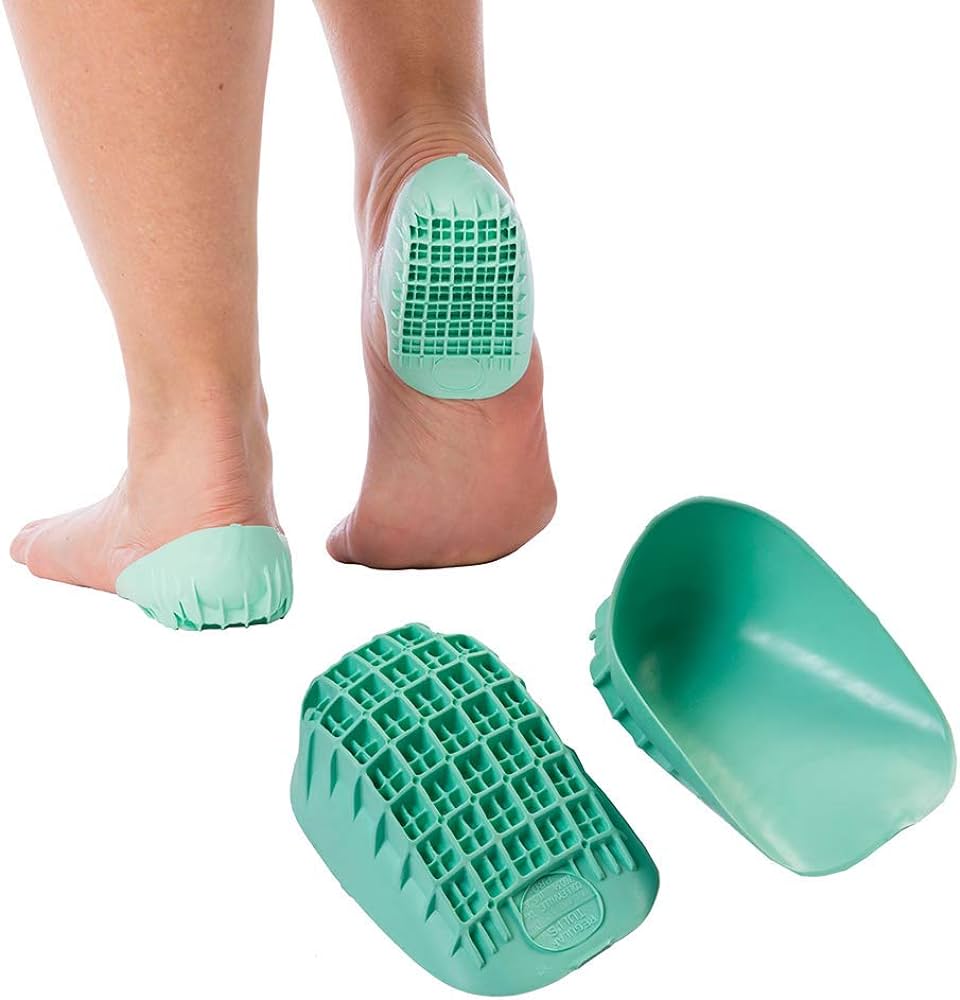
Nonoperative
- Indications
- Vast majority of cases
- Non-insertional tendinopathy
- Activity modification
- Physical Therapy
- Emphasis on eccentric exercises[29]
- Alfredson et al: RCT reported that 82% of patients using eccentric exercises returned to normal activities at 12 weeks, compared with 36% who used concentric exercises, sustained improvement at 12 months[30]
- In one study, a stretching program resulted in 88% of patients being satisfied with the results[31]
- NSAIDS
- Orthotics
- Extracorporeal Shockwave Therapy
- RCT demonstrated significant improvement when this was combined with eccentric exercises compared with eccentric exercises alone[35]
- RCT reported improved scores after ESWT, particularly in women[36]
- ESWT in refractory nonoperative cases showed benefit in a case control study[37]
- Saxena found 78% of patients improved at 1 year after 3 weeks of ESWT in a single arm study[38]
- Topical Glyceryl Trinitrate
- One RCT showed benefit for non-insertional tendinopathy compared to control group up to 3 years after treatment[39]
Additional Considerations
- Iontophoresis
- Kinesiology Taping
- Soft tissue mobilization
- Acupuncture
- Laser therapy
Procedures
- Corticosteroid Injection
- May have some early benefit, but 82% of patients experienced adverse event[40]
- Adverse outcomes: Achilles Tendon Rupture, decreased tendon strength
- Risks outweigh benefits[41]
- Achilles Tendon Injection and Tenotomy
- Achilles Paratenon Injection
- High Volume Injection
- A few small studies with limited follow up showed benefit when injecting 10 mL Bupivicaine combined with 40 mL normal saline into the paratenon[42][43]
- Dextrose Prolotherapy
- Platelet Rich Plasma
Operative: Non-Insertional
- Indications & Goals
- Failure of conservative measures of at least 4-6 months
- Goal is to resect degenerative tissue and release adhesions
- Technique (Non-Insertional)
- Percutaneous longitudinal tenotomies
- Minimally invasive tendon stripping
- Open tenosynovectomies
- Open debridement and tubularization
- Tendon augmentation with flexor hallucis longus (FHL)
- Technique (Insertional) [49]:
- Removal of calcified tendon
- Excision of the retrocalcaneal bursa
- Resection of the posterior calcaneal prominence
- Insertion reattachment
- Tendon transfer/graft
Rehab and Return to Play


Rehabilitation
- Exercise Rehabilitation - 4 Phases [52] [53]
- 1) Symptom management and load reduction
- Stops overloading and continued injury
- Complete rest and unloading can be detrimental
- Specific exercises include graduated heel rises
- 2) Recovery
- Strengthen calf muscle and improve tendon load teolerance
- Increasing repetitions, improving range of motion and movement speed
- Specific exercises include heel rises, quick-bounding heel rises, deep water running
- 3) Rebuilding
- Heavier strength training of the calf muscles focused on running and jumping
- Promotes tendon recovery
- Exercises include: weight heel rises, plyometrics with bilateral and unilateral jumping, quickbounding
- 4) Return to sport [53]
- Goal is return patient to activity and performance
- 1) Symptom management and load reduction
Rehab Program PDFs
- Oxford Achilles Tendon Eccentric Exercises PDF
- Mass General Achilles Tendonitis PDF
- Achilles Tendonitis Home Exercises PDF
- Silbernagal Rehab Protocol Achilles Tendonitis PDF
- Beht Isreal Achilles Tendon Exercises PDF
Return to Play
- Goal is return patient to activity and performance
- Athletes can be expected to return to sport anywhere from 6 weeks to 1 year after the initial injury depending on severity [53]
- Various factors must be considered when returning to sport:[53]
- Level of pain
- Tendon recovery, healing, and load
- Strength of athlete
- Range of motion of joint
- Function
- Demands of the specific sport
- Exercises include: sport specific movements, running, heel rises, plyometrics
Prognosis and Complications
Prognosis
- Patients can expect their symptoms to improve between 3 and 12 months after commencing treatment, but not beyond 12 months[54]
- Chronic symptoms persist in approximately a quarter of patients 10 years after treatment
- In an eight-year follow-up study, only 29% failed to respond adequately to non-operative management[55]
Complications
- Achilles Rupture
- Surgical
- Hematoma
- Seroma
- Thrombosis
- Study of 432 patients showed wound necrosis in 3%, superficial infection in 2.5%, and sural nerve injury in 1% following surgery [56]
See Also
- Foot And Ankle Anatomy (Main)
- Ankle Pain (Main)
- Foot Pain (Main)
- Physical Exam Foot And Ankle
- Tendinopathies Main
References
- ↑ Fox, James M., et al. "Degeneration and rupture of the Achilles tendon." Clinical Orthopaedics and Related Research® 107 (1975): 221-224.
- ↑ Kannus P, Jozsa L. Histopathological changes preceding spontaneous rupture of a tendon: a controlled study of 891 patients. J Bone Joint Surg [Am] 1991;73-A:1507– 1525.
- ↑ Khan KM, Forster BB, Robinson J, et al. Are ultrasound and magnetic resonance imaging of value in assessment of Achilles tendon disorders?: a two year prospective study. Br J Sports Med 2003;37:149–153.
- ↑ Kvist M. Achilles tendon injuries in athletes. Ann Chir Gynaecol 1991;80:188–201.
- ↑ de Jonge, Suzan, et al. "Incidence of midportion Achilles tendinopathy in the general population." British journal of sports medicine 45.13 (2011): 1026-1028.
- ↑ Lysholm J, Wiklander J. Injuries in runners. Am J Sports Med. 1987 Mar-Apr;15(2):168-71. doi: 10.1177/036354658701500213. PMID: 3578639
- ↑ Waldecker U, Hofmann G, Drewitz S. Epidemiologic investigation of 1394 feet: coincidence of hindfoot malalignment and Achilles tendon disorders. Foot Ankle Surg. 2012 Jun;18(2):119-23. doi: 10.1016/j.fas.2011.04.007. Epub 2011 Jun 8. PMID: 22443999.
- ↑ Romanowska, Magdalena J., et al. "Fluoroquinolone-Induced Achilles Tendon Damage: Structural and Biochemical Insights into Collagen Type I Alterations." International Journal of Molecular Sciences 26.20 (2025): 10028.
- ↑ Barfod, Kristoffer Weisskirchner. "Acute Achilles tendon rupture: assessment of non-operative treatment." Dan Med J 61 (2014): B4837.
- ↑ Hanlon, Shawn L., Bradley C. Bley, and Karin Grävare Silbernagel. "Determining the feasibility of exercise therapy and activity modification for treating adolescents with heel pain: a study protocol." BMJ Open Sport & Exercise Medicine 8.3 (2022): e001301.
- ↑ 11.0 11.1 11.2 11.3 11.4 11.5 Li HY, Hua YH. Achilles Tendinopathy: Current Concepts about the Basic Science and Clinical Treatments. Biomed Res Int. 2016;2016:6492597. doi:10.1155/2016/6492597
- ↑ Sharma P, Maffulli N. Understanding and managing achilles tendinopathy. Br J Hosp Med (Lond). 2006 Feb;67(2):64-7. doi: 10.12968/hmed.2006.67.2.20463. PMID: 16498904.
- ↑ Malliaras, Peter, et al. "Diagnostic domains, differential diagnosis and conditions requiring further medical attention that are considered important in the assessment for Achilles tendinopathy: a Delphi consensus study." British Journal of Sports Medicine 59.13 (2025): 891-901.
- ↑ Van Dijk, C. N., et al. "Terminology for Achilles tendon related disorders." Knee Surgery, Sports Traumatology, Arthroscopy 19.5 (2011): 835-841.
- ↑ Uquillas, Carlos A., et al. "Everything Achilles: knowledge update and current concepts in management: AAOS exhibit selection." JBJS 97.14 (2015): 1187-1195.
- ↑ Kvist M. Achilles tendon injuries in athletes. Ann Chir Gynaecol. 1991;80(2):188-201. PMID: 1897886.
- ↑ Owens BD, Wolf JM, Seelig AD, et al. . Risk factors for lower extremity tendinopathies in military personnel. Orthop J Sports Med 2013;1:232596711349270 10.1177/2325967113492707
- ↑ van der Vlist AC, Breda SJ, Oei EHG, Verhaar JAN, de Vos RJ. Clinical risk factors for Achilles tendinopathy: a systematic review. Br J Sports Med. 2019;53(21):1352-1361. doi:10.1136/bjsports-2018-099991
- ↑ 19.0 19.1 19.2 19.3 19.4 Irwin TA. Current concepts review: insertional achilles tendinopathy. Foot Ankle Int. 2010 Oct;31(10):933-9. doi: 10.3113/FAI.2010.0933. PMID: 20964977.
- ↑ van der Linden PD, van de Lei J, Nab HW, et al. . Achilles tendinitis associated with fluoroquinolones. Br J Clin Pharmacol 1999;48:433–7. 10.1046/j.1365-2125.1999.00016.x
- ↑ Milgrom C, Finestone A, Zin D, et al. . Cold weather training: a risk factor for Achilles paratendinitis among recruits. Foot Ankle Int 2003;24:398–401
- ↑ Pearce, Christopher J., and Audrey Tan. "Non-insertional Achilles tendinopathy." EFORT Open Reviews 1.11 (2016): 383-390.
- ↑ Thompson TC, Doherty JH. Spontaneous rupture of tendon of Achilles: a new clinical diagnostic test. J Trauma. 1962; 2: 126-129.
- ↑ 24.0 24.1 Hutchison, Anne-Marie, et al. "What is the best clinical test for Achilles tendinopathy?." Foot and ankle surgery 19.2 (2013): 112-117.
- ↑ Szaro, Pawel, Katarina Nilsson-Helander, and Michael Carmont. "MRI of the Achilles tendon–a comprehensive pictorial review. Part two." European journal of radiology open 8 (2021): 100343.
- ↑ Image courtesy of ankleandfootcenter.com.au
- ↑ Leung JL, Griffith JF. Sonography of chronic Achilles tendinopathy: a case-control study. J Clin Ultrasound. 2008 Jan;36(1):27-32. doi: 10.1002/jcu.20388. PMID: 17721925.
- ↑ Malanga, Gerard A., and Kenneth R. Mautner. " Atlas of ultrasound-guided musculoskeletal injections." (No Title) (2014)
- ↑ Magnussen RA, Dunn WR, Thomson AB. Nonoperative treatment of midportion Achilles tendinopathy: a systematic review. Clin J Sport Med 2009;19:54–64.
- ↑ Alfredson H, Pietilä T, Jonsson P, Lorentzon R. Heavy-load eccentric calf muscle training for the treatment of chronic Achilles tendinosis. Am J Sports Med 1998;26:360–366.
- ↑ Rosenbaum D, Hennig EM. The influence of stretching and warm-up exercises on Achilles tendon reflex activity. J Sport Sci 1995;13:481–490.
- ↑ Aström M, Westlin N. No effect of piroxicam on Achilles tendinopathy: a randomized study of 70 patients. Acta Orthop Scand 1992;63:631–634.
- ↑ Tsai WC, Hsu CC, Chou SW, et al. Effects of celecoxib on migration, proliferation and collagen expression of tendon cells. Connect Tissue Res 2007;48:46–51.
- ↑ Rabusin, Chantel L., et al. "Efficacy of heel lifts versus calf muscle eccentric exercise for mid-portion Achilles tendinopathy (the HEALTHY trial): study protocol for a randomised trial." Journal of foot and ankle research 12.1 (2019): 1-12.
- ↑ Rompe JD, Furia J, Maffulli N. Eccentric loading versus eccentric loading plus shock-wave treatment for midportion achilles tendinopathy: a randomized controlled trial. Am J Sports Med 2009;37:463–470.
- ↑ Rasmussen S, Christensen M, Mathiesen I, Simonson O. Shockwave therapy for chronic Achilles tendinopathy: a double-blind, randomized clinical trial of efficacy. Acta Orthop 2008;79:249–256.
- ↑ Furia JP. High-energy extracorporeal shock wave therapy as a treatment for chronic noninsertional Achilles tendinopathy. Am J Sports Med 2008;36:502–508.
- ↑ Saxena A, Ramdath S, O’Halloran P, Gerdesmeyer L, Gollwitzer H. Extra-corporeal pulsed-activated therapy (“EPAT” sound wave) for Achilles tendinopathy: a prospective study. J Foot Ankle Surg 2011;50:315–319.
- ↑ Kane TP, Ismail M, Calder JD. Topical glyceryl trinitrate and noninsertional Achilles tendinopathy: a clinical and cellular investigation. Am J Sports Med 2008;36:1160–1163.
- ↑ Hart L. Corticosteroid and other injections in the management of tendinopathies: a review. Clin J Sport Med 2011;21:540–541.
- ↑ Shrier I, Matheson GO, Kohl HW 3rd. Achilles tendonitis: are corticosteroid injections useful or harmful? Clin J Sport Med 1996;6:245–250.
- ↑ Chan O, O’Dowd D, Padhiar N, et al. High volume image guided injections in chronic Achilles tendinopathy. Disabil Rehabil 2008;30:1697–1708.
- ↑ Humphrey J, Chan O, Crisp T, et al. The short-term effects of high volume image guided injections in resistant non-insertional Achilles tendinopathy. J Sci Med Sport 2010;13:295–298.
- ↑ Maxwell NJ, Ryan MB, Taunton JE, Gillies JH, Wong AD. Sonographically guided intratendinous injection of hyperosmolar dextrose to treat chronic tendinosis of the Achilles tendon: a pilot study. Am J Roentgenol 2007;189:W215–W220.
- ↑ Yelland MJ, Sweeting KR, Lyftogt JA, et al. Prolotherapy injections and eccentric loading exercises for painful achilles tendinosis: a randomised trial. Br J Sports Med 2011;45:421–428.
- ↑ Kearney RS, Ji C, Warwick J, et al. Effect of Platelet-Rich Plasma Injection vs Sham Injection on Tendon Dysfunction in Patients With Chronic Midportion Achilles Tendinopathy: A Randomized Clinical Trial. JAMA. 2021;326(2):137–144.
- ↑ de Vos RJ, Weir A, van Schie HT, et al. Platelet-rich plasma injection for chronic Achilles tendinopathy: a randomized controlled trial. JAMA 2010;303:144–149.
- ↑ Sadoghi P, Rosso C, Valderrabano V, Leithner A, Vavken P. The role of platelets in the treatment of achilles tendon injuries. J Orthop Res 2013;31:111–118.
- ↑ DeOrio MJ, Easley ME. Surgical strategies: insertional achilles tendinopathy. Foot Ankle Int. 2008 May;29(5):542-50. doi: 10.3113/FAI-2008-0542. PMID: 18510913
- ↑ Image courtesy of verywellhealth.com
- ↑ Ganderton, Charlotte, et al. "Achilles tendinopathy: Understanding the key concepts to improve clinical management." Australasian Musculoskeletal Medicine 19.2 (2015): 12-18.
- ↑ Silbernagel KG, Hanlon S, Sprague A. Current Clinical Concepts: Conservative Management of Achilles Tendinopathy. J Athl Train. 2020 May;55(5):438-447. doi: 10.4085/1062-6050-356-19. Epub 2020 Apr 8. PMID: 32267723; PMCID: PMC7249277.
- ↑ 53.0 53.1 53.2 53.3 Silbernagel KG, Crossley KM. A proposed return-to-sport program for patients with midportion Achilles tendinopathy: rationale and implementation. J Orthop Sports Phys Ther. 2015;45(11):876–886.
- ↑ Lagas, I. F., J. L. Tol, and A. Weir. "One in four patients with midportion achilles tendinopathy has persisting symptoms after 10 years: a prospective cohort study." Am J Sports Med (2019).
- ↑ Paavola M, Kannus P, Paakkala T, Pasanen M, Järvinen M. Long-term prognosis of patients with achilles tendinopathy: an observational 8-year follow-up study. Am J Sports Med 2000;28:634–642.
- ↑ Paavola M, Orava S, Leppilahti J, Kannus P, Järvinen M. Chronic Achilles tendon overuse injury: complications after surgical treatment. An analysis of 432 consecutive patients. Am J Sports Med. 2000 Jan-Feb;28(1):77-82. doi: 10.1177/03635465000280012501. PMID: 10653548.
Created by:
John Kiel on 11 June 2019 01:35:19
Authors:
Last edited:
29 March 2026 13:03:56
Categories: