
Cannabidiol
Alternative Names
- CBD
- Cannabidiol
- Hemp-derived CBD
- Cannabidiol extract
- Hemp extract
- Phytocannabinoid
- Non-psychoactive cannabinoid
Background
- This page covers the supplement Cannabidiol (CBD)
History
- Early adoption among athletes was driven by anecdotal use for pain, inflammation, and recovery[1]
- In 2018 WADA removed CBD from its prohibited substances list, allowing athletes to use it legally in competition while other cannabinoids remained banned.[2]
Introduction


General
- Cannabidiol (CBD) is a non-psychoactive phytocannabinoid derived from the hemp plant
- Commonly used by athletes for recovery, pain relief, sleep support, and inflammation control without intoxicating effects[5]
- Interest in CBD has increased in sports due to concerns over opioid use and NSAID-related adverse effects in managing musculoskeletal pain.
Mechanism
- CBD modulates the endocannabinoid system indirectly, influencing CB1 and CB2 receptor activity involved in pain and inflammation pathways[6]
- It interacts with serotonin (5-HT1A) receptors, contributing to anxiolytic and potential sleep-enhancing effects relevant to athletic recovery
- CBD also affects TRPV1 receptors and inflammatory mediators, which may play a role in reducing nociception and exercise-induced inflammation
Formulations
- Oral forms include oils/tinctures, capsules, and softgels, which provide systemic effects but have variable bioavailability
- Edible formulations such as gummies and beverages offer convenience but have delayed onset due to first-pass metabolism
- Topical and transdermal products (creams, balms, patches) are used for localized musculoskeletal symptoms
- Inhaled forms (vaping) provide rapid onset but raise safety concerns related to pulmonary exposure
Terminology
- Full-spectrum CBD contains multiple cannabinoids, including trace amounts of THC
- Broad-spectrum CBD contains multiple cannabinoids but is processed to remove THC
- CBD isolate refers to purified cannabidiol without other cannabinoids or plant compounds
- Additional terms include hemp extract, phytocannabinoid, and nano-CBD (engineered for improved absorption)
Controversy
- Product labeling is inconsistent, with studies showing variability in CBD concentration and presence of undisclosed THC[7]
- Despite World Anti-Doping Agency permitting CBD, THC contamination may still result in positive drug tests for athletes[8]
- High-quality clinical evidence in athletes remains limited, with most data extrapolated from non-athlete populations[5]
- Regulatory oversight varies widely across countries and organizations, creating uncertainty in safety, legality, and standardization[9]
Athletic Performance Benefits
Pain Relief (Analgesia)
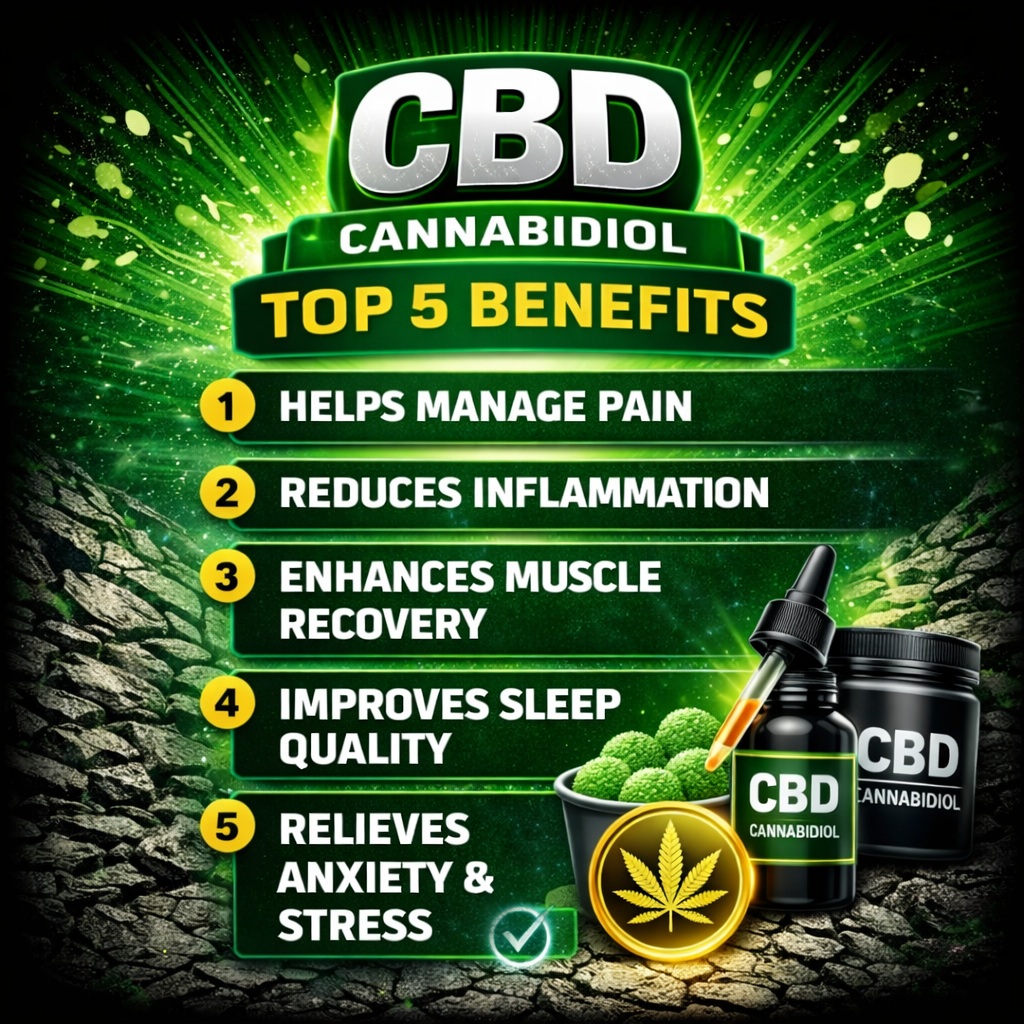
- May reduce musculoskeletal and neuropathic pain via endocannabinoid and TRPV1 pathways[10]
- May enhance anandamide signaling contributing to analgesia without opioid pathways[6]
- May provide an alternative to NSAIDs and opioids for pain management in athletes
Anti-Inflammatory Effects May reduce pro-inflammatory cytokines such as TNF-α and IL-6[11] May modulate immune response and oxidative stress pathways after intense exercise May help reduce exercise-induced inflammation and tissue irritation
Muscle Recovery
- May reduce delayed onset muscle soreness (DOMS) through anti-inflammatory and analgesic mechanisms[5]
- Commonly used by athletes to support recovery between training sessions
- May allow improved training consistency by reducing soreness-related downtime
Sleep Optimization
- May improve sleep quality by reducing anxiety and promoting relaxation[12]
- May help with sleep onset and maintenance in individuals with sleep disturbance[13]
- Improved sleep may indirectly enhance recovery and performance[14]
Anxiety / Stress Reduction
- May reduce performance anxiety via 5-HT1A receptor interaction[15]
- May decrease stress response and improve mental focus under pressure[16]
- May support recovery by reducing psychological stress load
Neuroprotection / Head Injury Support
- May provide neuroprotective effects through antioxidant and anti-inflammatory mechanisms[17]
- May reduce excitotoxicity and oxidative stress following brain injury
- Potential role in concussion management remains investigational[5]
Other Health Benefits


Mood Disorders (Depression / Stress)
- May modulate serotonin signaling contributing to antidepressant-like effects in preclinical models[19]
- May reduce stress-related behaviors and improve mood in early human studies[13]
Substance Use Disorders
- May reduce cue-induced craving and anxiety in opioid and heroin use disorder[20]
- May have potential role in nicotine and cannabis dependence through modulation of reward pathways[21]
Gastrointestinal Effects
- May reduce intestinal inflammation via modulation of enteric cannabinoid receptors[22]
- May help with symptoms such as abdominal pain and motility disorders in preclinical models
Dermatologic (Skin Health)
- May reduce sebocyte activity and inflammation relevant to acne pathogenesis[23]
- Exhibits anti-inflammatory effects that may benefit conditions such as eczema and psoriasis[11]
Immune Modulation
- May suppress excessive immune activation through cytokine modulation[24]
- May promote a shift toward anti-inflammatory immune profiles in preclinical studies
Bone Health
- May enhance fracture healing and bone remodeling via cannabinoid receptor signaling[25]
- May improve collagen cross-linking and bone strength in animal models
Metabolic Effects
- May influence glucose metabolism and insulin sensitivity in early studies[26]
- May affect lipid metabolism and body weight regulation via endocannabinoid pathways
Respiratory Effects
- May have bronchodilatory and anti-inflammatory effects in airway models[27]
- May reduce airway hyperresponsiveness in preclinical asthma models
Antimicrobial Effects
- Demonstrates antibacterial activity against Gram-positive organisms including resistant strains (e.g., MRSA)[28]
- May disrupt biofilm formation and bacterial virulence in early studies
Anticancer (Experimental)
- May induce apoptosis and inhibit proliferation in certain cancer cell lines[29]
- May reduce tumor growth and metastasis in preclinical models
Ophthalmologic Effects
- May reduce intraocular pressure in some experimental settings[30]
- Effects are variable and may differ based on dose and formulation
Anti-Nausea Effects
- May reduce nausea via serotonin and central nervous system pathways[31]
- Evidence strongest in chemotherapy-related nausea, extrapolated elsewhere
Seizure Reduction
- Reduces seizure frequency in certain epilepsy syndromes[32]
- Basis for FDA-approved CBD medications such as Epidiolex
Cardiovascular Effects
- May lower resting and stress-induced blood pressure[26]
- May have vasodilatory and anti-inflammatory vascular effects
Dosing
- No standardized dosing for athletes; commonly reported ranges ~10–50 mg/day with higher doses used in clinical settings[33]
- Dose-response appears variable with potential biphasic effects depending on dose and indication[15]
- Oral bioavailability is low and inconsistent, often requiring individualized titration
- Start low and titrate based on symptom response and tolerability[1]
Safety Profile
- Generally well tolerated with favorable safety profile in most studies[1]
- Does not produce euphoria or cognitive impairment typical of THC[6]
- Low abuse and dependence potential compared to other substances used in sport[34]
- Long-term safety data in healthy athletic populations remains limited
Adverse Effects
- Common side effects include fatigue, diarrhea, and changes in appetite or weight[1]
- May cause sedation or somnolence, particularly at higher doses[32]
- Elevated liver enzymes reported in some clinical populations
- Potential for contamination (e.g., THC) leading to unintended effects[7]
Pharmacokinetics

- Oral CBD has low and variable bioavailability due to first-pass metabolism[33]
- Lipophilic compound with improved absorption when taken with high-fat meals
- Metabolized primarily in the liver via cytochrome P450 enzymes (CYP3A4, CYP2C19)[36]
- Half-life varies widely depending on route and chronicity of use
Interactions
- Inhibits CYP450 enzymes, potentially increasing levels of co-administered medications[36]
- May interact with anticoagulants, antiepileptics, and sedatives[1]
- Potential additive sedation when combined with CNS depressants
- Requires caution in athletes taking multiple supplements or medications[7]
WADA Considerations
- CBD is permitted in sport by the World Anti-Doping Agency
- All other cannabinoids (including THC) remain prohibited in competition[37]
- Risk of THC contamination in supplements may lead to positive drug tests[7]
- Athletes should use third-party tested products to reduce doping risk
See Also
References
- ↑ 1.0 1.1 1.2 1.3 1.4 Huestis, Marilyn A., et al. “Cannabidiol Adverse Effects and Toxicity.” Current Neuropharmacology, vol. 17, no. 10, 2019, pp. 974–989.
- ↑ World Anti-Doping Agency. “Summary of Major Modifications and Explanatory Notes: 2018 Prohibited List.” WADA, 2018.
- ↑ Kudrich, Christopher, and Christina Wiggin. "When your patient asks about cannabidiol." Clinical Phytoscience 11.1 (2025): 14.
- ↑ Fordjour, Eric, et al. "Cannabis‐infused foods: phytonutrients, health, and safe product innovations." Comprehensive Reviews in Food Science and Food Safety 23.5 (2024): e70021.
- ↑ 5.0 5.1 5.2 5.3 McCartney, Daniel, et al. “Cannabidiol and Sports Performance: A Narrative Review of Relevant Evidence and Recommendations for Future Research.” Sports Medicine, vol. 50, 2020, pp. 2079–2091.
- ↑ 6.0 6.1 6.2 Ibeas Bih, Carolina, et al. “Molecular Targets of Cannabidiol in Neurological Disorders.” Neurotherapeutics, vol. 12, no. 4, 2015, pp. 699–730.
- ↑ 7.0 7.1 7.2 7.3 Maughan, Ronald J., et al. “Dietary Supplements and the High-Performance Athlete.” British Journal of Sports Medicine, vol. 52, no. 7, 2018, pp. 439–455.
- ↑ World Anti-Doping Agency. “Summary of Major Modifications and Explanatory Notes: 2018 Prohibited List.” WADA, 2018.
- ↑ Corroon, Jamie, and Rod Kight. “Regulatory Status of Cannabidiol in the United States: A Perspective.” Cannabis and Cannabinoid Research, vol. 3, no. 1, 2018, pp. 190–194.
- ↑ Vučković, Snezana, et al. “Cannabinoids and Pain: New Insights from Old Molecules.” Frontiers in Pharmacology, vol. 9, 2018, article 1259.
- ↑ 11.0 11.1 Atalay, Selin, et al. “Antioxidative and Anti-Inflammatory Properties of Cannabidiol.” Antioxidants, vol. 9, no. 1, 2020, article 21.
- ↑ Babson, Kimberly A., et al. “Cannabis, Cannabinoids, and Sleep: A Review of the Literature.” Current Psychiatry Reports, vol. 19, no. 4, 2017, article 23.
- ↑ 13.0 13.1 Shannon, Scott, et al. “Cannabidiol in Anxiety and Sleep: A Large Case Series.” The Permanente Journal, vol. 23, 2019.
- ↑ Fullagar, Hugh H. K., et al. “Sleep and Athletic Performance: The Effects of Sleep Loss on Exercise Performance, and Physiological and Cognitive Responses to Exercise.” Sports Medicine, vol. 45, no. 2, 2015, pp. 161–186.
- ↑ 15.0 15.1 Zuardi, Antonio W., et al. “Cannabidiol, a Cannabis sativa Constituent, as an Anxiolytic Drug.” Brazilian Journal of Medical and Biological Research, vol. 36, no. 4, 2003, pp. 421–427.
- ↑ Bergamaschi, Mateus M., et al. “Cannabidiol Reduces the Anxiety Induced by Simulated Public Speaking in Treatment-Naïve Social Phobia Patients.” Neuropsychopharmacology, vol. 36, 2011, pp. 1219–1226.
- ↑ Hampson, A. J., et al. “Cannabidiol and (−)Δ9-Tetrahydrocannabinol Are Neuroprotective Antioxidants.” Proceedings of the National Academy of Sciences, vol. 95, no. 14, 1998, pp. 8268–8273.
- ↑ Liu, Zhenhua. "Cannabidiol (CBD) and colorectal tumorigenesis: potential dual modulatory roles via the serotonergic pathway." Current Oncology 32.7 (2025): 375.
- ↑ Zanelati, Thalita V., et al. “Antidepressant-Like Effects of Cannabidiol in Mice: Possible Involvement of 5-HT1A Receptors.” British Journal of Pharmacology, vol. 159, no. 1, 2010, pp. 122–128.
- ↑ Hurd, Yasmin L., et al. “Cannabidiol for the Reduction of Cue-Induced Craving and Anxiety in Drug-Abstinent Individuals with Heroin Use Disorder.” American Journal of Psychiatry, vol. 176, no. 11, 2019, pp. 911–922.
- ↑ Prud’homme, Mathieu, et al. “Cannabidiol as an Intervention for Addictive Behaviors: A Systematic Review of the Evidence.” Substance Abuse: Research and Treatment, vol. 9, 2015, pp. 33–38.
- ↑ Pellati, Federica, et al. “Cannabinoids and the Gastrointestinal Tract.” European Journal of Pharmacology, vol. 720, no. 1–3, 2013, pp. 57–66.
- ↑ Oláh, Attila, et al. “Cannabidiol Exerts Sebostatic and Anti-Inflammatory Effects on Human Sebocytes.” Journal of Clinical Investigation, vol. 124, no. 9, 2014, pp. 3713–3724.
- ↑ Nagarkatti, Prakash, et al. “Cannabinoids as Novel Anti-Inflammatory Drugs.” Future Medicinal Chemistry, vol. 1, no. 7, 2009, pp. 1333–1349.
- ↑ Kogan, Nir M., et al. “Cannabidiol, a Major Non-Psychotropic Cannabis Constituent Enhances Fracture Healing and Stimulates Lysyl Hydroxylase Activity in Osteoblasts.” Journal of Bone and Mineral Research, vol. 30, no. 10, 2015, pp. 1905–1913.
- ↑ 26.0 26.1 Jadoon, K. A., et al. “Efficacy and Safety of Cannabidiol and Tetrahydrocannabivarin on Glycemic and Lipid Parameters in Patients with Type 2 Diabetes.” Diabetes Care, vol. 39, no. 10, 2016, pp. 1777–1786.
- ↑ Karmaus, Peter W. F., et al. “Cannabidiol Inhibits Allergic Airway Inflammation in Mice.” European Journal of Pharmacology, vol. 671, no. 1–3, 2011, pp. 1–5.
- ↑ Appendino, Giovanni, et al. “Antibacterial Cannabinoids from Cannabis sativa: A Structure-Activity Study.” Journal of Natural Products, vol. 71, no. 8, 2008, pp. 1427–1430.
- ↑ Massi, Paola, et al. “Cannabidiol as Potential Anticancer Drug.” British Journal of Clinical Pharmacology, vol. 75, no. 2, 2013, pp. 303–312.
- ↑ Tomida, I., et al. “Effect of Sublingual Application of Cannabidiol on Intraocular Pressure: A Pilot Study.” Journal of Glaucoma, vol. 15, no. 5, 2006, pp. 349–353.
- ↑ Parker, Linda A., et al. “Regulation of Nausea and Vomiting by Cannabinoids.” British Journal of Pharmacology, vol. 163, no. 7, 2011, pp. 1411–1422.
- ↑ 32.0 32.1 Devinsky, Orrin, et al. “Trial of Cannabidiol for Drug-Resistant Seizures in the Dravet Syndrome.” New England Journal of Medicine, vol. 376, no. 21, 2017, pp. 2011–2020.
- ↑ 33.0 33.1 Millar, Samantha A., et al. “A Systematic Review on the Pharmacokinetics of Cannabidiol in Humans.” Frontiers in Pharmacology, vol. 9, 2018, article 1365.
- ↑ World Health Organization. “Cannabidiol (CBD) Critical Review Report.” WHO, 2018.
- ↑ Kicman, Aleksandra, and Marek Toczek. "The effects of cannabidiol, a non-intoxicating compound of cannabis, on the cardiovascular system in health and disease." International journal of molecular sciences 21.18 (2020): 6740.
- ↑ 36.0 36.1 Zendulka, Ondrej, et al. “Cannabinoids and Cytochrome P450 Interactions.” Current Drug Metabolism, vol. 17, no. 3, 2016, pp. 206–226.
- ↑ World Anti-Doping Agency. “Summary of Major Modifications and Explanatory Notes: 2018 Prohibited List.” WADA, 2018.
Created by:
John Kiel on 10 April 2026 13:27:51
Authors:
Last edited:
11 April 2026 11:51:17
Categories: