
Fish Oil
Alternative Names
- Omega-3 Fish Oil
- Fish Oil Supplement
- Marine Omega-3 Supplement
- Omega-3 Fatty Acid Supplement
- EPA/DHA Supplement
- Marine Oil Supplement
- Long-Chain Omega-3 Supplement
- Fish Body Oil
- Marine Fish Oil
- Omega-3 Oil
Background
- This page refers to the supplement fish oil, often called omega 3
History
- Fish oils have been used medicinally for centuries, with references dating back to ancient Greece and Rome.[1]
- Cod liver oil became a popular treatment in Europe during the 18th and 19th centuries, particularly for rickets, malnutrition, and rheumatic diseases.[2]
- Interest in fish oil increased during the 1970s after studies of Greenland Inuit populations suggested a link between marine-based diets and lower rates of cardiovascular disease.[3]
- Modern research identified the omega-3 fatty acids EPA and DHA as the primary bioactive components responsible for many of fish oil's physiological effects.[4]
Introduction

General
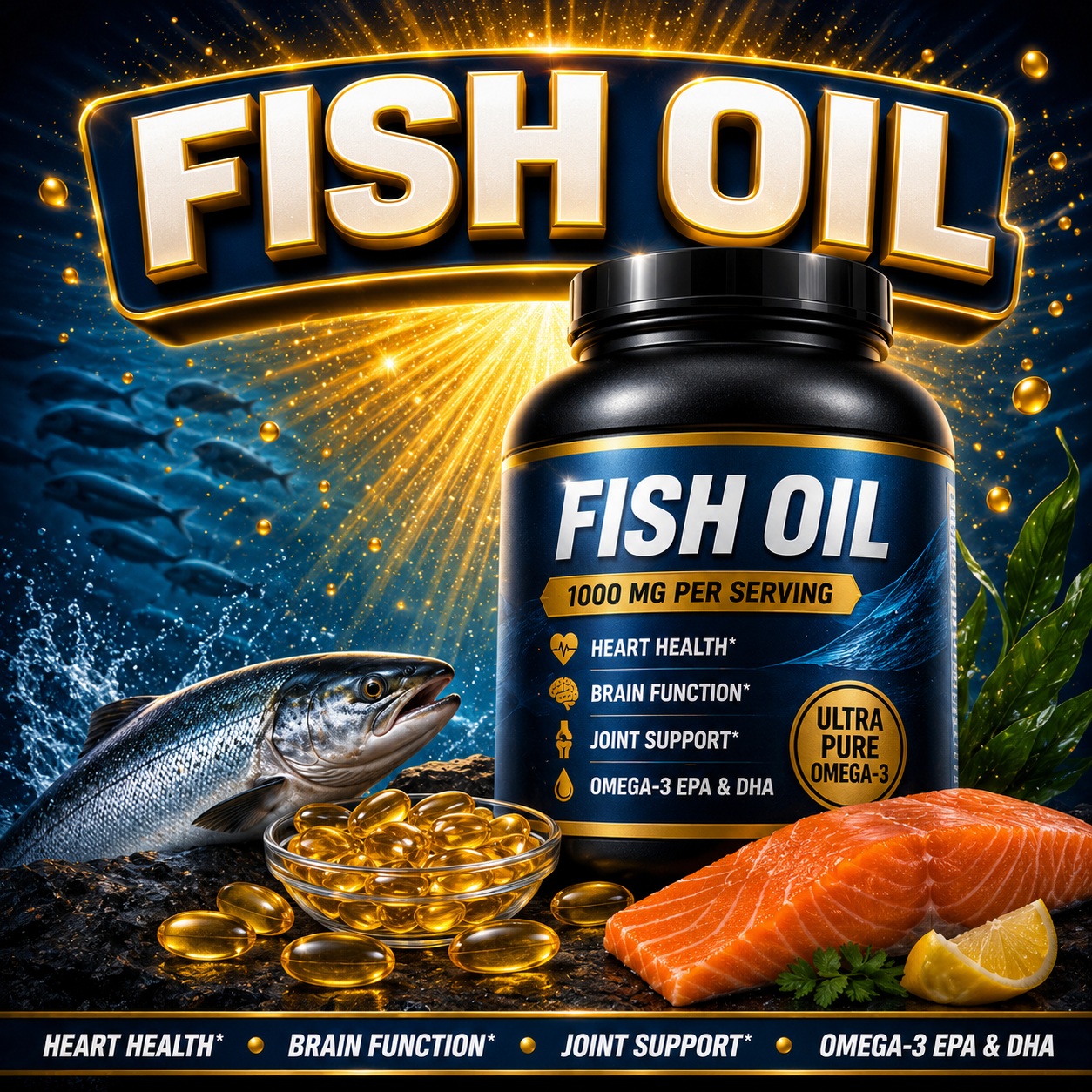
- Fish oil is a dietary supplement derived from the tissues of oily fish and is a rich source of omega-3 fatty acids
- The primary omega-3 fatty acids in fish oil are eicosapentaenoic acid (EPA) and docosahexaenoic acid (DHA)
- Fish oil is available in multiple forms, including triglyceride, ethyl ester, re-esterified triglyceride, and phospholipid formulations
- Common dietary sources of fish oil include salmon, mackerel, sardines, herring, anchovies, and tuna
- Fish oil supplements are commonly used to support cardiovascular, neurological, ocular, musculoskeletal, and general health
Mechanism
- EPA and DHA are incorporated into cell membranes and influence cellular signaling
- Omega-3 fatty acids help regulate inflammatory pathways
- Fish oil lowers triglyceride production in the liver
- DHA is a major structural component of the brain and retina
- Fish oil may support recovery, joint health, and muscle function
Formulations
- Fish Oil Concentrate – Standard EPA and DHA supplement
- Triglyceride (TG) – Natural form found in fish oil
- Ethyl Ester (EE) – Concentrated omega-3 formulation
- Re-Esterified Triglyceride (rTG) – Concentrated formulation with improved absorption
- Prescription Omega-3 – Purified EPA or EPA/DHA products
- Cod Liver Oil – Fish oil containing vitamins A and D
- Krill Oil – Omega-3 source derived from krill
Controversy
- Cardiovascular benefits remain debated in healthy individuals
- Evidence for performance enhancement is inconsistent
- Clinical effects on inflammation vary by condition
- Typical doses do not appear to significantly increase bleeding risk
- Product quality and omega-3 content vary between brands
- Sustainability of marine harvesting remains a concern
- Evidence for cancer prevention is limited
Athletic Performance Benefits



Recovery
- May reduce delayed-onset muscle soreness (DOMS)[7]
- May improve recovery following intense training sessions
- May reduce exercise-induced muscle damage markers
- May help athletes tolerate higher training volumes
Muscle Function
- May support muscle protein synthesis[8]
- May improve neuromuscular function
- May help preserve muscle mass during periods of inactivity
- May support healthy muscle adaptation to training
Strength and Power
- May improve strength gains during resistance training
- May improve force production in some athletes[9]
- May enhance muscle quality and contractile function
- Evidence for improvements in power output remains mixed
Endurance Performance
- May improve exercise economy
- May reduce oxygen consumption during submaximal exercise[10]
- May support cardiovascular efficiency during prolonged activity
- Direct improvements in endurance performance remain inconsistent
Brain Health and Concussion
- DHA is a major structural component of the brain
- May support cognitive function during athletic participation
- May reduce biomarkers associated with repetitive head impacts.[11]
- Research continues regarding potential concussion-related benefits
Joint Health and Inflammation
- May help regulate exercise-related inflammation
- May reduce joint pain and stiffness in some individuals
- May support joint comfort during training and competition
- May improve recovery from repetitive mechanical stress
- Benefits appear greatest in athletes with higher inflammatory loads
Other Health Benefits

Cardiovascular Health
- May lower triglyceride levels[13]
- May support overall cardiovascular health
- May modestly reduce blood pressure in some individuals
- May improve endothelial function and vascular health
- Prescription omega-3 products are used to treat severe hypertriglyceridemia
Brain and Cognitive Health
- DHA is a major structural component of the brain
- May support normal cognitive function throughout life
- May support memory and attention in some populations
- May help maintain brain health with aging
- Research on prevention of cognitive decline remains ongoing
Eye Health
- DHA is highly concentrated within the retina
- May support normal visual function
- May help maintain retinal health
- May improve symptoms of dry eye disease in some individuals[14]
Pregnancy and Early Development
- DHA contributes to fetal brain development
- DHA contributes to fetal retinal development
- Omega-3 intake is commonly recommended during pregnancy
- May support infant neurodevelopment
- Maternal omega-3 status influences fetal DHA availability
Mental Health
- May support overall emotional well-being
- May help regulate mood in some individuals
- EPA-rich formulations have been studied in depressive disorders[15]
- Benefits appear to vary between individuals and conditions
Inflammatory Conditions
- May help regulate inflammatory pathways
- May reduce symptoms in some inflammatory disorders
- Has been studied in rheumatoid arthritis and inflammatory bowel disease[16]
- Clinical response varies by condition and dose
Healthy Aging
- May support cardiovascular health with aging
- May help maintain muscle mass and function in older adults
- May support cognitive and visual health later in life
- Has been studied as part of healthy aging and longevity strategies
Skin Health
- May support skin barrier function
- May help maintain skin hydration
- May help regulate inflammatory skin conditions
- Has been studied in eczema and psoriasis[17]
Immune Function
- Omega-3 fatty acids influence immune cell signaling
- May help regulate immune responses
- Supports production of specialized pro-resolving mediators
- Effects on infection prevention remain uncertain
Dosing
- General health doses often provide 250–500 mg/day EPA + DHA
- Athlete-focused dosing commonly ranges from 1–3 g/day EPA + DHA[18]
- Triglyceride-lowering doses are usually higher and should be clinician-directed[19]
- Dose should be based on combined EPA + DHA, not total fish oil
- Taking fish oil with meals may improve absorption and reduce GI symptoms
Safety Profile
- Fish oil is generally well tolerated at typical supplement doses
- The NIH notes omega-3 supplements are usually safe when used appropriately[20]
- Very high doses may increase bleeding risk in susceptible individuals
- Product quality varies between over-the-counter brands
- Third-party testing is preferred for athletes and competitive populations
Adverse Effects
- Fishy aftertaste or “fish burps” are common
- Nausea, reflux, loose stools, and abdominal discomfort may occur
- Higher doses may increase bruising or bleeding tendency
- Cod liver oil may cause excess vitamin A or D intake if overused
- Rare allergic reactions may occur in patients with fish or seafood allergy
Pharmacokinetics

- EPA and DHA are absorbed in the small intestine
- Absorption improves when taken with a fat-containing meal
- Omega-3 fatty acids are transported in chylomicrons and lipoproteins
- EPA and DHA are incorporated into plasma, red blood cells, and cell membranes
- Tissue omega-3 levels increase gradually over weeks to months
Interactions
- May have additive effects with anticoagulant or antiplatelet medications
- May modestly lower blood pressure when combined with antihypertensive therapy
- May increase LDL cholesterol in some patients at high doses
- Avoid combining multiple omega-3 products without dose tracking
- Discuss use before surgery or procedures if taking high doses
WADA Considerations
- Fish oil is not prohibited by WADA[22]
- Athletes should still use third-party tested products
- NSF Certified for Sport or Informed Sport products are preferred
- Contaminated supplements remain a general anti-doping risk
- Athletes are responsible for all substances found in their body
See Also
References
- ↑ Guy RA. The History of Cod Liver Oil as a Remedy. Archives of Pediatrics & Adolescent Medicine. 1923;26(2):112-116.
- ↑ Rajakumar K. Vitamin D, Cod-Liver Oil, Sunlight, and Rickets: A Historical Perspective. Pediatrics. 2003.
- ↑ Dyerberg J, Bang HO. Lipid metabolism, atherogenesis, and haemostasis in Eskimos. Lancet. 1979;2(8140):433-435.
- ↑ Leaf A, Weber PC. Cardiovascular effects of n-3 fatty acids. New England Journal of Medicine. 1988;318(9):549-557.
- ↑ D’Angelo, S. T. E. F. A. N. I. A., Giuseppe Madonna, and Davide Di Palma. "Effects of fish oil supplementation in the sport performance." J. Phys. Educ. Sport 20.Suppl. S4 (2020): 2322-2329.
- ↑ Velikanov, Nikolay L., and Vladimir A. Naumov. "Transportation of fish oil through a pipeline by a single-screw pump." (2024).
- ↑ Ochi E, Tsuchiya Y. Omega-3 Fatty Acids and Skeletal Muscle Health. Marine Drugs. 2018;16(12):452.
- ↑ Smith GI, Atherton P, Reeds DN, et al. Clinical Science. 2011;121(6):267-278.
- ↑ Da Boit M, Sibson R, Sivasubramaniam S, et al. American Journal of Clinical Nutrition. 2017;105(1):151-158.
- ↑ Peoples GE, McLennan PL, Howe PRC, Groeller H. Journal of Cardiovascular Pharmacology. 2008;52(6):540-547.
- ↑ Oliver JM, Jones MT, Kirk KM, et al. Medicine & Science in Sports & Exercise. 2016;48(6):974-982.
- ↑ Sikka, Priyanshi, et al. "Exploring the therapeutic potential of omega-3 fatty acids in depression." Environmental Science and Pollution Research 28.32 (2021): 43021-43034.
- ↑ Skulas-Ray AC, Wilson PWF, Harris WS, et al. Circulation. 2019;140(12):e673-e691.
- ↑ Bhargava R, Kumar P, Phogat H, Kaur A, Kumar M. Cornea. 2015;34(4):413-420.
- ↑ Liao Y, Xie B, Zhang H, et al. Translational Psychiatry. 2019;9:190.
- ↑ Calder PC. Biochimica et Biophysica Acta. 2015;1851(4):469-484.
- ↑ Vaughn AR, Branum A, Sivamani RK. International Journal of Molecular Sciences. 2018;19(12):3661.
- ↑ Ritz MS. Promoting Optimal Omega-3 Fatty Acid Status in Athletes. Gatorade Sports Science Institute.
- ↑ Skulas-Ray AC, Wilson PWF, Harris WS, et al. Circulation. 2019;140(12):e673-e691.
- ↑ National Institutes of Health Office of Dietary Supplements. Omega-3 Fatty Acids: Fact Sheet for Health Professionals. Accessed June 10, 2026.
- ↑ Li, Miao, Zhiqiang Li, and Yuying Fan. "Omega-3 fatty acids: multi-target mechanisms and therapeutic applications in neurodevelopmental disorders and epilepsy." Frontiers in nutrition 12 (2025): 1598588.
- ↑ World Anti-Doping Agency. The Prohibited List. Accessed June 10, 2026.
Created by:
John Kiel on 10 June 2026 19:39:36
Authors:
Last edited:
14 June 2026 04:12:39
Categories: