
Iron Supplement
Alternative Names
- Iron Supplementation
- Iron Supplements for Athletes
- Iron for Athletes
- Oral Iron Supplement
- Iron Replacement
- Iron Replacement Therapy
- Oral Iron Therapy
- Iron Tablets
- Iron Pills
- Elemental Iron
- Ferrous Sulfate
- Ferrous Gluconate
- Ferrous Fumarate
- Heme Iron
- Non-Heme Iron
- Iron Deficiency Supplement
- Sports Anemia Supplement
Background
- This page refers to supplementation of Iron in its various formulations
History
- Recognition of “sports anemia” emerged in endurance athletes in the mid-20th century, particularly in runners[1]
- By the 1970s–1980s, research established iron deficiency as a common performance-limiting factor in female and endurance athletes, leading to routine screening and supplementation strategies in sports medicine[2]
- In the 1990s–2000s, studies clarified the role of iron in aerobic metabolism and VO₂ max, demonstrating that supplementation could improve performance even in non-anemic but iron-depleted athletes[3]
- Modern research (2010s–present) has focused on hepcidin regulation, timing of supplementation, and individualized dosing strategies[4]
Introduction

General
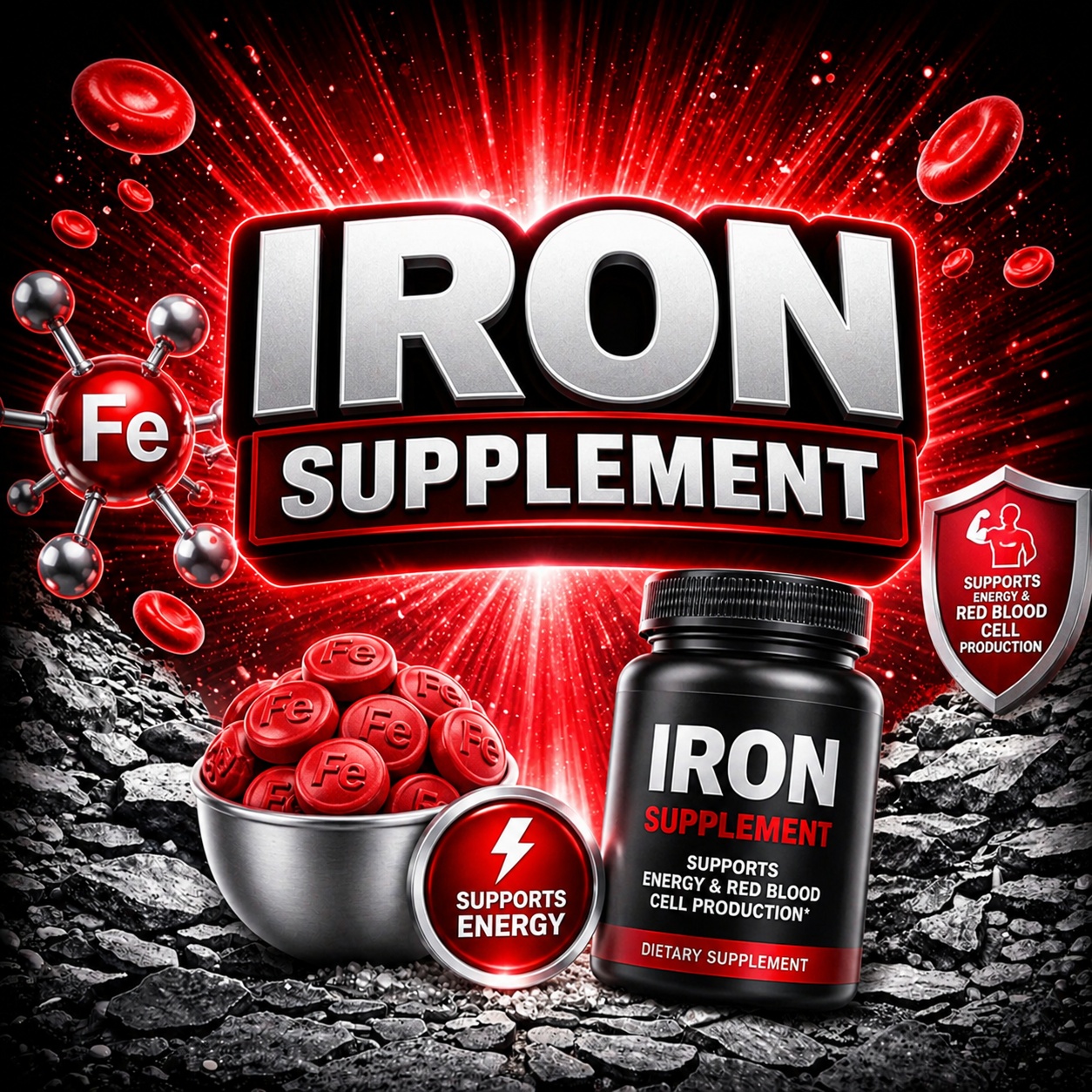
- Iron is essential for oxygen transport via hemoglobin and myoglobin, directly impacting aerobic performance and endurance capacity
- Athletes—especially endurance athletes, females, and those in weight-sensitive sports—are at higher risk for iron deficiency due to sweat loss, hemolysis, and inadequate intake
- Iron deficiency exists on a spectrum (low ferritin → iron-deficient erythropoiesis → anemia), with performance decline often occurring before anemia develops
- Routine screening (e.g., ferritin levels) is commonly used in high-performance settings to identify subclinical deficiency
- Dietary sources include heme (animal-based, higher absorption) and non-heme (plant-based, lower absorption), often necessitating supplementation in at-risk groups
Formulations
- Oral – Non-Heme Iron Salts
- Ferrous sulfate (most commonly used by far)
- Ferrous gluconate
- Ferrous fumarate
- Oral – Other Iron Compounds
- Ferric citrate
- Ferric sulfate
- Polysaccharide iron complex
- Carbonyl iron
- Heme iron polypeptide
- Intravenous (IV) Iron
- Iron sucrose
- Ferric carboxymaltose
- Iron dextran
- Ferric gluconate
Mechanism
- Supports hemoglobin synthesis, improves oxygen delivery to working muscles
- Enhances myoglobin content, improves intramuscular oxygen storage and utilization
- Facilitates mitochondrial function and oxidative phosphorylation, improves aerobic metabolism
- Prevents fatigue associated with iron deficiency, maintains training intensity and recovery
- Restores normal erythropoiesis in deficient athletes, improves VO₂ max and endurance performance
Controversy
- Supplementation in iron-replete athletes shows inconsistent performance benefits, generally not recommended
- Risk of gastrointestinal side effects (nausea, constipation) may limit adherence
- Hepcidin-mediated absorption variability complicates optimal dosing and timing strategies
- Over-supplementation carries risk of iron overload and oxidative stress
- Debate exists regarding ideal ferritin thresholds for supplementation in athletes (e.g., <30 vs <50 ng/mL)
Athletic Performance Benefits
Aerobic Capacity (VO₂ max)[3]
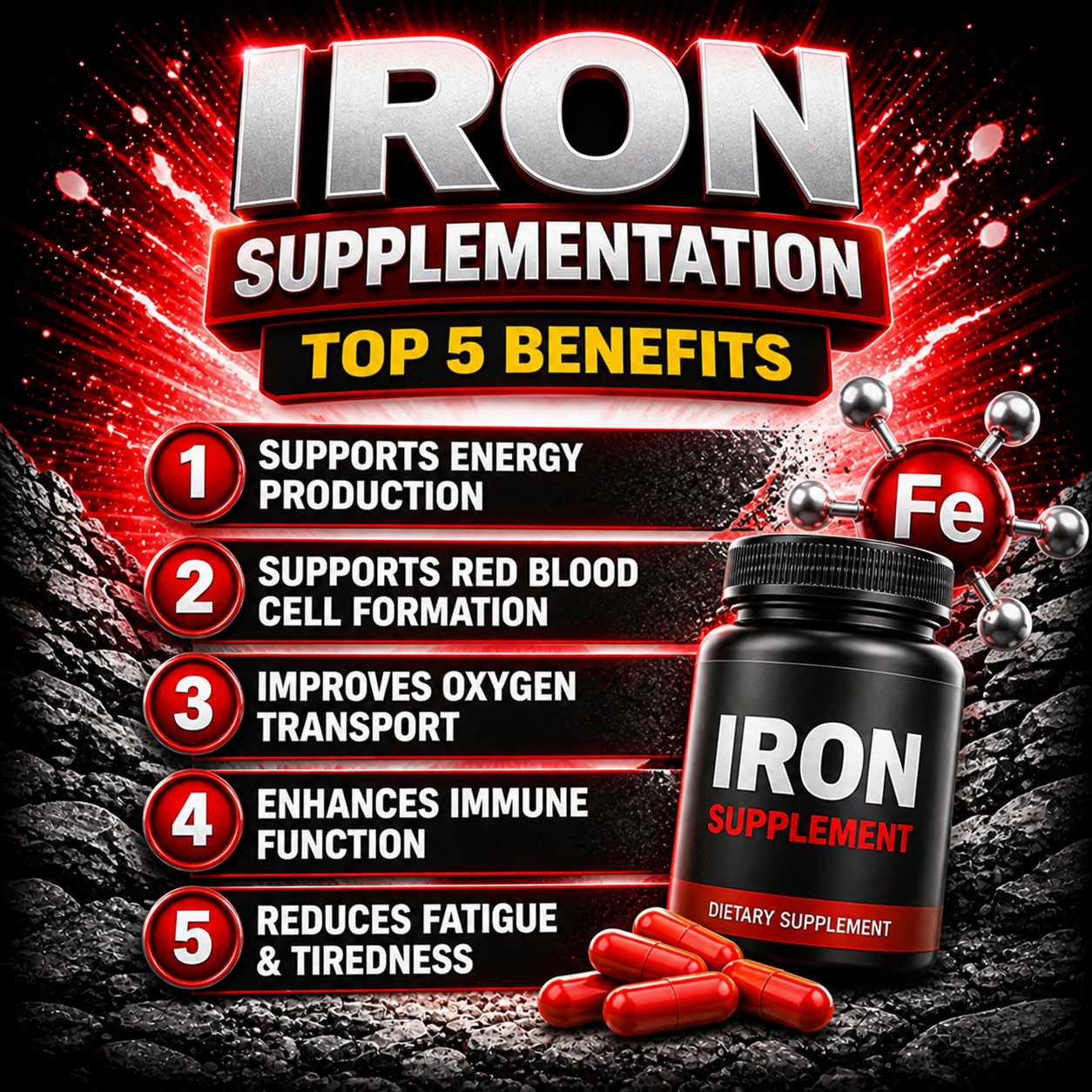
- ↑ Hemoglobin → ↑ oxygen delivery
- ↑ VO₂ max in iron-deficient athletes
- Improves performance even without anemia
- Supports high-intensity aerobic output
Endurance Performance[6]
- ↑ Time-to-exhaustion
- ↑ Sustained submaximal performance
- Improves running/cycling efficiency
- Benefits greatest in low ferritin states
Fatigue / Perceived Exertion[7]
- ↓ Fatigue during training
- ↓ Perceived exertion (RPE)
- ↑ Training tolerance
- Improves daily energy levels
Mitochondrial Function / Energy Metabolism[8]
- ↑ Oxidative enzyme activity
- ↑ Mitochondrial efficiency
- Supports aerobic ATP production
- Delays onset of fatigue
Recovery & Training Adaptation[4]
- ↑ Erythropoiesis (red blood cell production)
- Improves post-exercise recovery
- Supports adaptation to training load
- Maintains consistent performance output
Immune Function[9]
- Supports innate and adaptive immunity
- ↓ Illness frequency during heavy training
- Helps maintain training consistency
- Important in overreaching/overtraining states
Cognitive Function / Focus[10]
- Improves attention and concentration
- ↓ Mental fatigue during prolonged activity
- Supports decision-making in competition
- Relevant in iron-deficient, non-anemic athletes
Thermoregulation[11]
- Supports normal temperature regulation
- May improve heat tolerance in endurance athletes
- Reduces physiologic strain in hot environments
- Important for outdoor and high-intensity sports
Muscle Function / Strength[8]
- Supports muscle oxygenation via myoglobin
- May improve muscle efficiency
- Helps prevent performance decline with deficiency
- Indirect role in strength and power output
Other Health Benefits


- Ferrous iron is generally better absorbed than ferric iron[14]
Pregnancy & Fetal Development[15]
- Reduces risk of maternal anemia and fatigue
- Supports fetal brain development and growth
- Decreases risk of low birth weight and preterm delivery
Thyroid Function[16]
- Supports thyroid hormone synthesis (T3/T4 production)
- Improves response to iodine supplementation in deficiency states
- Prevents impaired thyroid metabolism associated with low iron
Dermatologic & Hair Health[17]
- Supports hair growth and reduces hair shedding in deficiency
- Improves brittle nails and koilonychia
- Enhances skin and mucosal integrity
Dosing
- Typical adult RDA: 8 mg/day for men and 18 mg/day for premenopausal women[14]
- Adult tolerable upper intake level: 45 mg/day from food and supplements
- Deficiency dosing commonly uses 40–100 mg elemental iron per dose
- Alternate-day dosing may improve absorption and tolerability
- Take with vitamin C or away from calcium when possible
Safety Profile
- Safe when dosed based on documented deficiency[14]
- Avoid routine use in iron-replete athletes
- Monitor ferritin, hemoglobin, and transferrin saturation
- Use caution with hemochromatosis or iron overload
- Keep away from children due to overdose risk
Adverse Effects
- Constipation, nausea, and abdominal discomfort are common[14]
- Dark stools are expected and benign
- Diarrhea, vomiting, and metallic taste may occur
- High doses may cause gastritis or ulcer irritation
- Severe overdose can cause organ failure or death
Pharmacokinetics
- Absorption occurs mainly in the duodenum and proximal jejunum
- Hepcidin decreases intestinal iron absorption
- Food, calcium, and phytates reduce absorption
- Iron is transported by transferrin and stored as ferritin
Interactions
- Calcium can reduce iron absorption[14]
- Proton pump inhibitors may reduce nonheme iron absorption
- Iron can reduce levothyroxine absorption
- Iron may reduce levodopa absorption
- Separate iron from tetracyclines and fluoroquinolones
WADA Considerations
- Iron is not listed as a prohibited substance[18]
- Permitted in and out of competition
- IV iron should be medically justified and documented
- Athletes should use third-party tested products
- Confirm status against the current annual WADA list
See Also
References
- ↑ Weight, L. M., and P. J. Jacobs. “Athletes’ Pseudoanemia.” Sports Medicine, vol. 11, no. 5, 1991, pp. 289–299.
- ↑ Haymes, E. M. “Iron Status in Athletes: An Update.” Sports Medicine, vol. 10, no. 2, 1990, pp. 71–83.
- ↑ 3.0 3.1 Hinton, Pamela S., et al. “Iron Supplementation Improves Endurance after Training in Iron-Depleted, Nonanemic Women.” Journal of Applied Physiology, vol. 88, no. 3, 2000, pp. 1103–1111.
- ↑ 4.0 4.1 Peeling, Peter, et al. “Iron Considerations for the Athlete: A Narrative Review.” European Journal of Applied Physiology, vol. 114, no. 11, 2014, pp. 2221–2231.
- ↑ Bloor, Sarah R., Rudolph Schutte, and Anthony R. Hobson. "Oral iron supplementation—gastrointestinal side effects and the impact on the gut microbiota." Microbiology Research 12.2 (2021): 491-502.
- ↑ Rowland, Thomas, et al. “The Effect of Iron Therapy on the Exercise Capacity of Nonanemic Iron-Deficient Adolescent Runners.” American Journal of Diseases of Children, vol. 142, no. 2, 1988, pp. 165–169.
- ↑ McClung, James P., et al. “Iron Status and the Female Athlete.” Journal of Trace Elements in Medicine and Biology, vol. 28, no. 4, 2014, pp. 388–392.
- ↑ 8.0 8.1 Beard, John, and Brian Tobin. “Iron Status and Exercise. ”The American Journal of Clinical Nutrition, vol. 72, no. 2, 2000, pp. 594S–597S.
- ↑ Beard, John L. “Iron Biology in Immune Function, Muscle Metabolism and Neuronal Functioning.” The Journal of Nutrition, vol. 131, no. 2, 2001, pp. 568S–579S.
- ↑ McCann, Judith C., and Bruce N. Ames. “An Overview of Evidence for a Causal Relation between Iron Deficiency during Development and Deficits in Cognitive or Behavioral Function.” The American Journal of Clinical Nutrition, vol. 85, no. 4, 2007, pp. 931–945.
- ↑ Hinton, Pamela S. “Iron and the Endurance Athlete.” Applied Physiology, Nutrition, and Metabolism, vol. 39, no. 9, 2014, pp. 1012–1018.
- ↑ McMillen, Shasta A., et al. "Benefits and risks of early life iron supplementation." Nutrients 14.20 (2022): 4380.
- ↑ Ebea‐Ugwuanyi, Pearl O., et al. "Oral iron therapy: current concepts and future prospects for improving efficacy and outcomes." British journal of haematology 204.3 (2024): 759-773.
- ↑ 14.0 14.1 14.2 14.3 14.4 National Institutes of Health Office of Dietary Supplements. “Iron: Fact Sheet for Health Professionals.” NIH Office of Dietary Supplements, 4 Sept. 2025.
- ↑ Milman, Nils. “Iron and Pregnancy—A Delicate Balance.” Annals of Hematology, vol. 85, 2006, pp. 559–565.
- ↑ Zimmermann, Michael B. “The Influence of Iron Status on Iodine Utilization and Thyroid Function.” Annual Review of Nutrition, vol. 26, 2006, pp. 367–389.
- ↑ Trost, Lara B., et al. “The Diagnosis and Treatment of Iron Deficiency and Its Potential Relationship to Hair Loss.” Journal of the American Academy of Dermatology, vol. 54, no. 5, 2006.
- ↑ World Anti-Doping Agency. “The Prohibited List.” WADA, 2026.
Created by:
John Kiel on 28 April 2026 02:40:47
Authors:
Last edited:
5 May 2026 14:58:19
Categories: