
Vitamin B12
Alternative Names
- Cobalamin
- Vitamin B12 (Cobalamin)
- Cyanocobalamin
- Methylcobalamin
- Hydroxocobalamin
- Adenosylcobalamin
Background
- This page covers Vitamin B12 or Cobalmin
History
- 1849: Thomas Addison first described pernicious anemia, a fatal condition later linked to Vitamin B12 deficiency. [1]
- 1926: George Minot and William Murphy demonstrated that a liver-rich diet could treat pernicious anemia, marking a major breakthrough in B12-related therapy. [2]
- 1948: Karl Folkers and colleagues isolated Vitamin B12 (cobalamin), enabling targeted treatment and supplementation. [3]
- 1956: Dorothy Hodgkin determined the complex molecular structure of Vitamin B12 using X-ray crystallography, advancing understanding of its biochemical role. [4]
Introduction
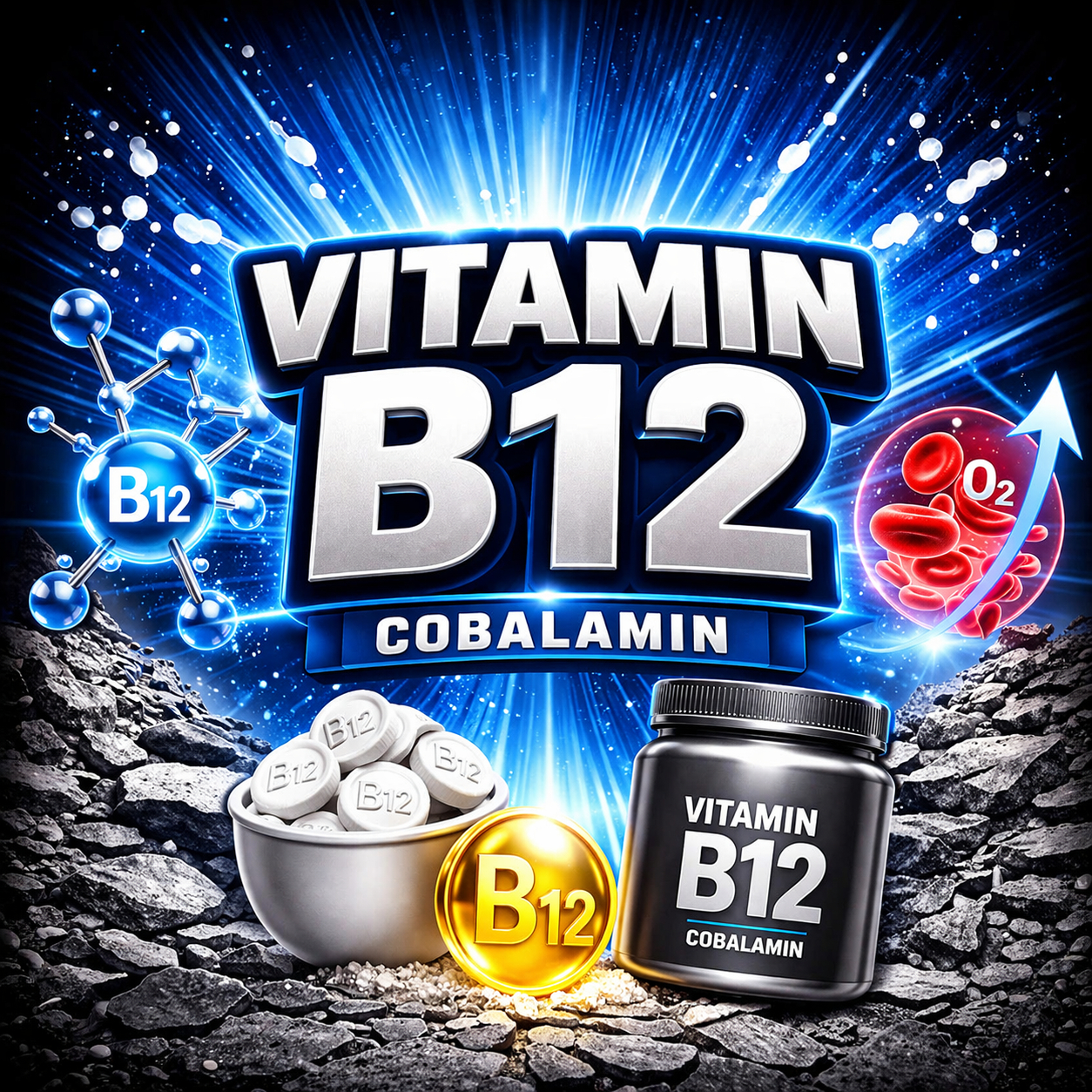

General
- Essential water-soluble vitamin required for hematologic and neurologic function
- Plays a key role in oxygen transport via red blood cell production
- Supports endurance, recovery, and overall performance in athletes
- Deficiency can present as fatigue, weakness, and decreased exercise tolerance
- Higher relevance in endurance athletes and those with dietary restrictions
Mechanism
- Cofactor for methionine synthase → supports DNA synthesis and cellular repair
- Cofactor for methylmalonyl-CoA mutase → critical for fatty acid and energy metabolism
- Maintains myelin integrity → supports neuromuscular function and coordination
- Facilitates red blood cell maturation → improves oxygen delivery to tissues
- Helps regulate homocysteine levels, which may impact cardiovascular efficiency
Formulations / Terminology
- Cyanocobalamin: most common, stable, widely used in supplements
- Methylcobalamin: active coenzyme form, commonly marketed for neurologic benefits
- Hydroxocobalamin: injectable form with longer half-life
- Adenosylcobalamin: mitochondrial form involved in energy metabolism
- Available as oral, sublingual, intranasal, and intramuscular formulations
Controversy
- Limited evidence that B12 improves performance in non-deficient athletes
- Popular “B12 shots for energy” lack strong evidence in normal populations
- Debate over superiority of methylcobalamin vs cyanocobalamin (no clear clinical advantage in most cases)
- Over-supplementation common due to perception of performance benefit
- Subclinical deficiency vs “optimal levels” in athletes remains poorly defined
At-Risk Populations (Athletic Focus)
- Vegetarian and vegan athletes due to lack of animal-based intake
- Athletes with low caloric intake or weight-class restrictions
- Individuals with malabsorption conditions (e.g., GI disorders, bariatric surgery)
- Chronic use of proton pump inhibitors or metformin
- Older athletes with reduced intrinsic factor and absorption capacity
Athletic Performance Benefits
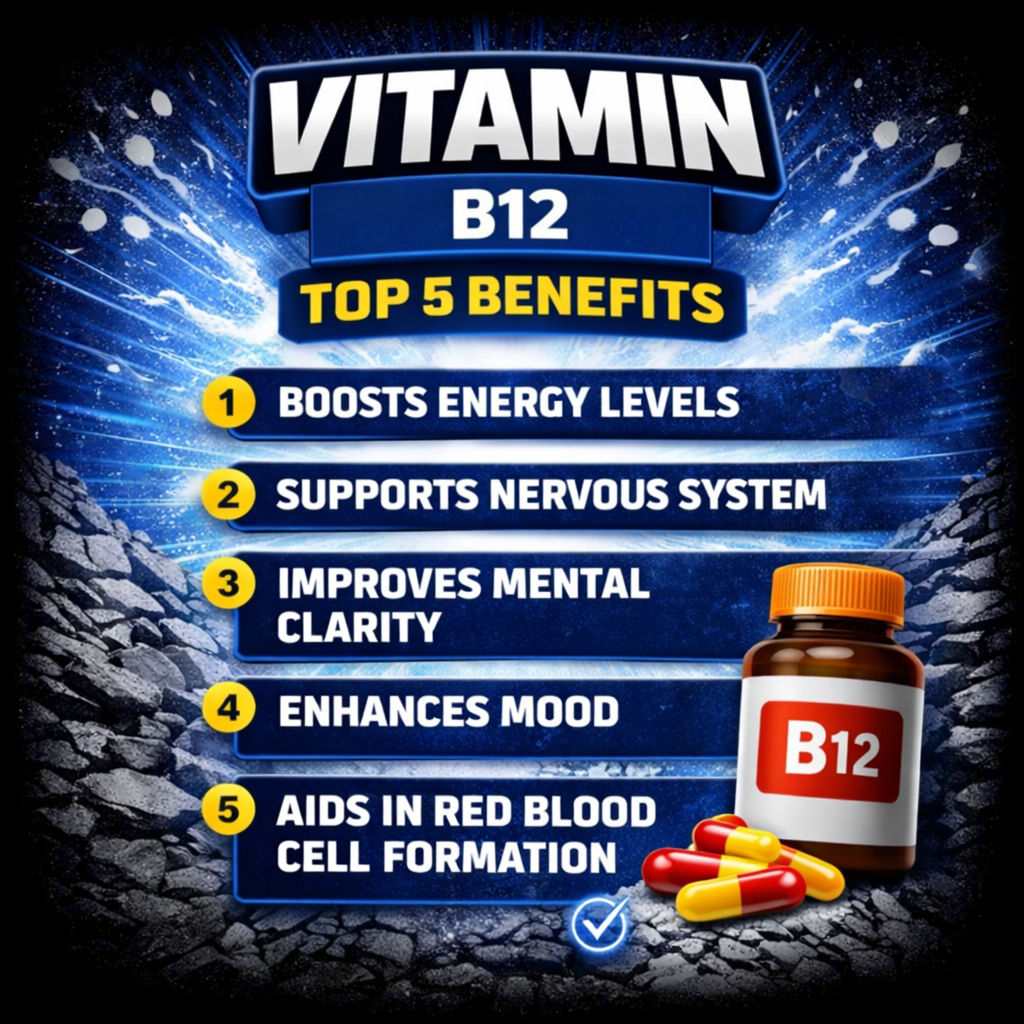
Endurance & Aerobic Capacity
- Supports red blood cell production → improves oxygen delivery to working muscles
- Helps prevent megaloblastic anemia, which impairs endurance performance
- May improve perceived energy levels in deficient athletes[5]
Energy Metabolism
- Cofactor in pathways involved in fatty acid and amino acid metabolism
- Supports conversion of nutrients into usable cellular energy (ATP indirectly)
- May reduce fatigue in athletes with low or borderline B12 levels[6]
Neuromuscular Function
- Maintains myelin sheath integrity → improves nerve conduction
- Supports coordination, reaction time, and motor control
- Deficiency may lead to paresthesias, weakness, and impaired performance
Recovery & Tissue Repair
- Required for DNA synthesis and cell turnover
- Supports muscle repair and adaptation following training
- Plays a role in reducing fatigue related to inefficient cellular recovery
Cognitive Performance & Focus
- Supports central nervous system function
- May improve focus, concentration, and mental clarity in deficient states
- Important for decision-making and reaction time in sport
Injury Prevention (Indirect)
- Prevents neurologic deficits that can impair balance and proprioception
- Helps maintain neuromuscular coordination, reducing injury risk
- Supports overall physiologic resilience in high-training athletes
High-Risk Athlete Optimization
- Most benefit seen in vegetarian/vegan athletes or those with low intake
- Supplementation can restore normal performance capacity in deficient individuals
- Screening may be appropriate in athletes with fatigue or unexplained performance decline[7]
Other Health Benefits

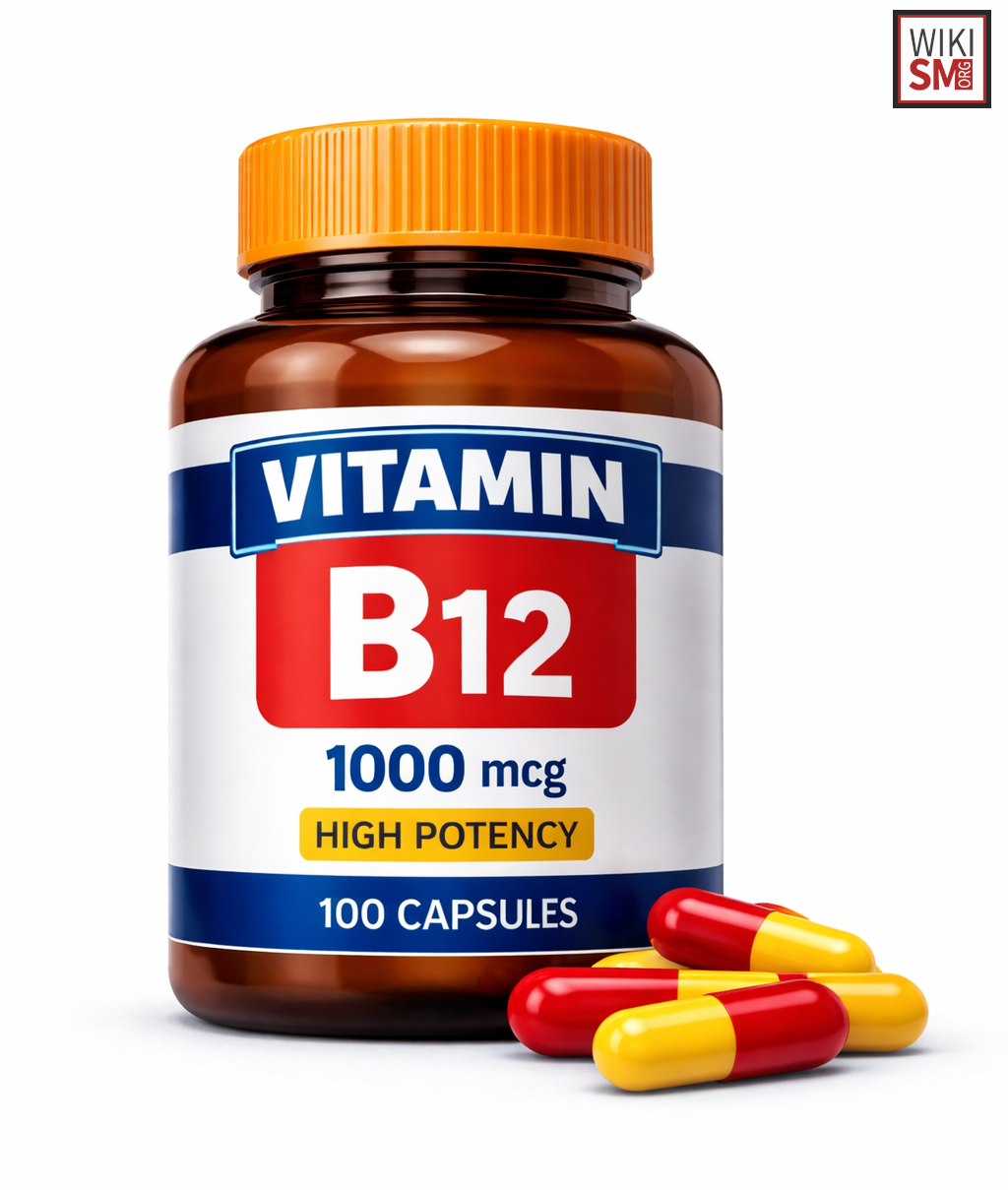
Hematologic Health
- Essential for normal red blood cell formation and prevention of megaloblastic anemia
- Supports adequate hemoglobin levels and oxygen-carrying capacity
- Deficiency can lead to fatigue, pallor, and dyspnea[9]
Neurologic Function
- Maintains myelin sheath integrity and nerve conduction
- Prevents peripheral neuropathy, paresthesias, and gait disturbances
- Severe deficiency associated with subacute combined degeneration of the spinal cord[10]
Cognitive & Mental Health
- Supports memory, concentration, and cognitive processing
- Deficiency linked to cognitive decline and dementia-like symptoms
- Plays a role in mood regulation, with associations to depression[11]
Cardiovascular Health
- Helps regulate homocysteine levels via methionine metabolism
- Elevated homocysteine associated with atherosclerosis and cardiovascular risk
- B12 (with folate and B6) contributes to vascular health maintenance[12]
Pregnancy & Fetal Development
- Critical for DNA synthesis and fetal neurologic development
- Works with folate to reduce risk of neural tube defects
- Deficiency associated with adverse pregnancy outcomes[13]
Bone Health
- Low B12 levels associated with reduced bone mineral density
- May increase risk of osteoporosis and fractures, particularly in older adults
- Potential role via effects on osteoblast activity and homocysteine metabolism
Gastrointestinal & Nutritional Health
- Requires intrinsic factor and gastric acid for absorption
- Deficiency seen in pernicious anemia, bariatric surgery, and malabsorption syndromes
- Important marker of overall nutritional status, especially in aging populations
Energy & Fatigue (General Population)
- Supports overall cellular energy processes
- Deficiency commonly presents with fatigue and generalized weakness
- Supplementation improves symptoms in deficient individuals but not consistently in normal levels[14]
Dosing

- Typical dietary requirement: 2.4 mcg/day (higher in pregnancy/lactation)
- Oral supplementation: 250–1000 mcg daily for mild deficiency or maintenance
- High-dose oral therapy (e.g., 1000–2000 mcg daily) effective even without intrinsic factor
- Intramuscular dosing: 1000 mcg weekly × 4–8 weeks, then monthly for maintenance
- Athletes with deficiency or high risk (e.g., vegan) may require routine supplementation or periodic monitoring
Safety Profile
- Generally very safe, even at high doses due to water solubility
- No established upper intake limit due to low toxicity risk
- Excess amounts are typically excreted in urine
- Safe for long-term use in deficiency states and maintenance therapy
- Widely used across diverse populations, including athletes and older adults
Adverse Effects
- Rare overall; most patients tolerate supplementation well
- Mild effects: nausea, headache, diarrhea, or injection site discomfort
- Hypersensitivity reactions are rare but reported (more common with injectable forms)
- Acneiform eruptions have been described with high-dose supplementation
- Rapid correction of severe deficiency may rarely cause hypokalemia
Pharmacokinetics

- Absorbed in the terminal ileum via intrinsic factor–mediated transport
- Passive diffusion allows absorption of high oral doses independent of intrinsic factor
- Stored primarily in the liver, with large total body reserves (years of supply)
- Enterohepatic circulation contributes to conservation of B12
- Elimination occurs via biliary excretion and renal pathways
Interactions
- Metformin may reduce B12 absorption with long-term use
- Proton pump inhibitors and H2 blockers decrease gastric acid, impair release from food
- Chloramphenicol may blunt hematologic response to B12 therapy
- Folate supplementation can mask hematologic signs of B12 deficiency while neurologic damage progresses
- Alcohol may contribute to nutritional deficiency and impaired absorption
WADA Considerations
- Vitamin B12 is not prohibited by the World Anti-Doping Agency
- Permitted via oral, sublingual, and intramuscular routes
- Commonly used in sports medicine for deficiency correction and recovery support
- “B12 injections for performance” are allowed but not evidence-based in non-deficient athletes
- Athletes should ensure supplements are third-party tested to avoid contamination with banned substances
See Also
References
- ↑ Addison T. On the constitutional and local effects of disease of the suprarenal capsules. London: Samuel Highley; 1855.
- ↑ Minot GR, Murphy WP. Treatment of pernicious anemia by a special diet. JAMA. 1926;87(7):470–476.
- ↑ Rickes EL, Brink NG, Koniuszy FR, Wood TR, Folkers K. Crystalline vitamin B12. Science. 1948;107(2781):396–397.
- ↑ Hodgkin DC, et al. Structure of vitamin B12. Nature. 1956;178:64–66.
- ↑ O’Leary F, Samman S. Vitamin B12 in health and disease. Nutrients. 2010;2(3):299–316.
- ↑ Woolf K, Manore MM. B-vitamins and exercise: does exercise alter requirements? Int J Sport Nutr Exerc Metab. 2006;16(5):453–484.
- ↑ Volpe SL. Vitamins, minerals, and exercise. Nutrients. 2015;7(3):2044–2052.
- ↑ Memon, Nazia M., et al. "Comparative bioavailability study of supplemental oral Sucrosomial® vs. oral conventional vitamin B12 in enhancing circulatory B12 levels in healthy deficient adults: a multicentre, double-blind randomized clinical trial." Frontiers in Nutrition 11 (2024): 1493593.
- ↑ O’Leary F, Samman S. Vitamin B12 in health and disease. Nutrients. 2010;2(3):299–316.
- ↑ Stabler SP. Vitamin B12 deficiency. N Engl J Med. 2013;368:149–160.
- ↑ Smith AD, Refsum H. Vitamin B12 and cognition. Am J Clin Nutr. 2009;89(2):707S–711S.
- ↑ Clarke R, et al. Homocysteine and vascular disease. BMJ. 2012;345:e4688.
- ↑ Black MM. Effects of vitamin B12 and folate deficiency on brain development. Food Nutr Bull. 2008;29(2 Suppl):S126–S131.
- ↑ Volpe SL. Vitamins, minerals, and exercise. Nutrients. 2015;7(3):2044–2052.
- ↑ Shipton, Michael J., and Jecko Thachil. "Vitamin B12 deficiency–A 21st century perspective." Clinical medicine 15.2 (2015): 145-150.
Created by:
John Kiel on 5 April 2026 21:19:16
Authors:
Last edited:
5 April 2026 21:50:18
Categories: