
Vitamin C
Alternative Names
- Ascorbic Acid
- L-Ascorbic Acid
- Ascorbate
- Vitamin C Supplement
- Buffered Vitamin C
- Liposomal Vitamin C
- Sodium Ascorbate
- Calcium Ascorbate
- Ester-C
- Ascorbyl Palmitate
Background
- This page refers to the supplement vitamin C
History
- Early recognition of Scurvy in sailors during the 18th century led to the identification of citrus fruits as a preventative measure[1]
- In the early 20th century, Albert Szent-Györgyi isolated ascorbic acid (Vitamin C)[2]
- By the 1970s–1980s, research began exploring Vitamin C supplementation in athletes for immune support and recovery[3]
Introduction

General
- Water-soluble vitamin essential for collagen synthesis, tendon/ligament integrity, and wound healing[5]
- Potent antioxidant that helps mitigate exercise-induced oxidative stress and muscle damage
- Supports immune function, particularly during periods of heavy training or competition[6]
- May aid in iron absorption, important for endurance athletes at risk for deficiency[7]
Terminology / Formulations
- Ascorbic Acid: pure, most common supplemental form
- Buffered Vitamin C: mineral ascorbates (e.g., sodium ascorbate, calcium ascorbate) designed to reduce GI irritation
- Liposomal Vitamin C: encapsulated form aimed at improving absorption and bioavailability
- Ester-C: calcium ascorbate with metabolites, marketed for prolonged retention
- Ascorbyl Palmitate: fat-soluble derivative often used in combination antioxidant formulations
Mechanism
- Cofactor in collagen synthesis → supports tendon, ligament, and cartilage repair[5]
- Scavenges reactive oxygen species generated during intense exercise
- Contributes to carnitine synthesis → may support energy metabolism and endurance[6]
- Enhances immune cell function → may reduce incidence or duration of upper respiratory infections [8]
Controversy
- High-dose antioxidant supplementation may blunt mitochondrial and muscle adaptation to endurance training [9]
- Inconsistent evidence regarding reduction in muscle soreness or performance enhancement[5]
- Routine high-dose supplementation is not universally recommended for well-nourished athletes[7]
- Emphasis is shifting toward dietary sources rather than chronic high-dose supplementation[6]
Athletic Performance Benefits

Immune Function / Illness Prevention
- May reduce incidence of upper respiratory tract infections (URTI) in athletes undergoing heavy training loads [10]
- Can shorten duration and severity of URTI symptoms, helping maintain training consistency [11]
- Supports neutrophil and lymphocyte function during physiologic stress[6]
- May be particularly beneficial in athletes exposed to cold environments or prolonged endurance events [12]
Recovery / Muscle Damage
- Reduces exercise-induced oxidative stress following high-intensity or prolonged exercise[5]
- May attenuate secondary muscle damage related to free radical formation
- Mixed evidence for reduction in delayed onset muscle soreness (DOMS)
- May support faster return to baseline function following intense training sessions[7]
Tendon / Ligament / Connective Tissue Health
- Essential cofactor for collagen synthesis, supporting tendon and ligament structure[5]
- May enhance healing following tendon or ligament injury when nutritional status is adequate[6]
- Supports cartilage health and joint integrity under repetitive load [13]
- May be useful adjunct in rehabilitation phases requiring tissue remodeling[7]
Endurance / Energy Metabolism
- Required for carnitine synthesis, facilitating fatty acid transport and aerobic metabolism[6]
- May reduce fatigue in individuals with subclinical deficiency[7]
- Limited evidence for direct improvements in VO₂ max or endurance performance in well-nourished athletes
- May support performance indirectly through improved recovery and reduced illness burden
Iron Absorption / Hematologic Support
- Enhances absorption of non-heme iron, supporting hemoglobin and oxygen delivery[7]
- May help prevent iron deficiency anemia in endurance athletes [14]
- Particularly relevant for female athletes and those with dietary restrictions
Antioxidant Protection
- Neutralizes reactive oxygen species generated during high-intensity exercise[5]
- Helps maintain cellular membrane integrity during physiologic stress[6]
- May reduce oxidative biomarkers following endurance exercise
- Excessive supplementation may blunt adaptive signaling pathways in muscle [15]
Other Health Benefits

Skin Health / Wound Healing
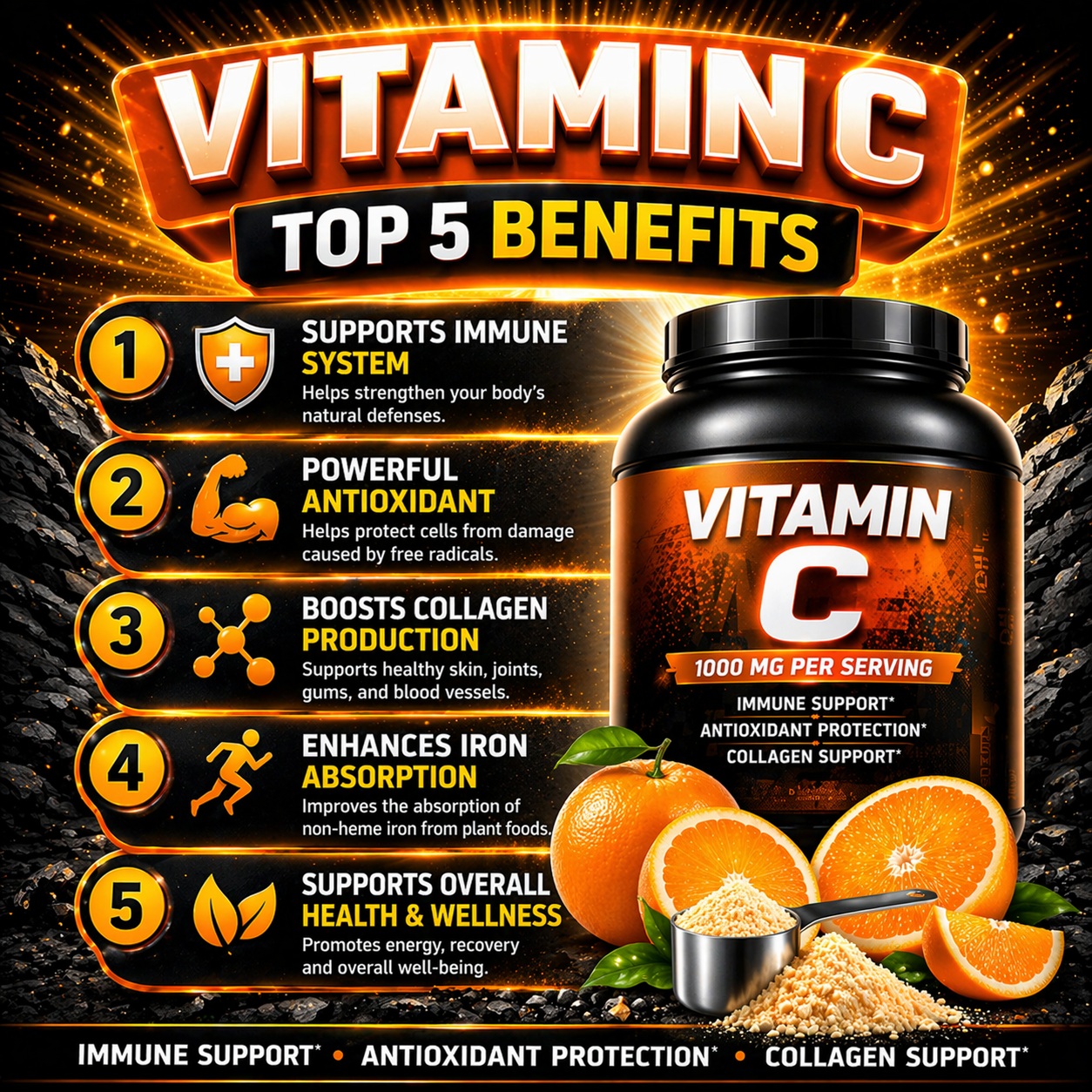
- Essential for collagen synthesis, supporting skin integrity and accelerated wound healing[6]
- May improve dermal repair and reduce healing time following injury or surgery [17]
Cardiovascular Health
- Supports endothelial function and nitric oxide availability, contributing to vascular health [18]
- May modestly reduce blood pressure, particularly in individuals with hypertension [19]
Cognitive Function / Neurologic Health
- Acts as an antioxidant in the central nervous system, protecting against oxidative stress [20]
- May support neurotransmitter synthesis, including dopamine and norepinephrine [21]
Eye Health
- Contributes to antioxidant protection in the lens, potentially reducing risk of cataract formation [22]
- Included in combination formulations (e.g., AREDS) for slowing progression of age-related macular degeneration [23]
Cancer / Antioxidant Defense
- Functions as an antioxidant that may help reduce oxidative DNA damage [24]
- Epidemiologic studies suggest diets high in vitamin C–rich foods are associated with lower cancer risk, though supplementation data are inconsistent[25]
Iron Metabolism / Anemia Prevention
- Enhances absorption of non-heme iron in the gastrointestinal tract
- May reduce risk of iron deficiency anemia in at-risk populations [26]
Respiratory Health
- May reduce severity and duration of respiratory infections, particularly under physical stress [27]
- Some evidence suggests benefit in exercise-induced bronchoconstriction [28]
Metabolic / Endocrine Health
- May improve markers of oxidative stress and inflammation in metabolic conditions [29]
- Potential role in improving insulin sensitivity, though evidence remains mixed [30]
Gout / Uric Acid Regulation
- May lower serum uric acid levels through increased renal excretion [31]
- Associated with reduced risk of gout in some longitudinal studies [32]
Dosing
- The adult RDA for vitamin C is 90 mg/day for men and 75 mg/day for women; people who smoke need an additional 35 mg/day. For most athletes, routine daily needs are generally met through diet unless there is deficiency, poor intake, or a specific clinical reason to supplement.[25]
- Oral absorption is most efficient at moderate intakes; at 30–180 mg/day, about 70%–90% is absorbed, but absorption falls substantially at higher doses.
- In sport-specific guidance, the Australian Institute of Sport notes that 500–1000 mg/day acutely during illness may be considered for some athletes under supervision, but routine unsupervised use is not generally advocated[33]
Safety Profile
- Vitamin C is generally well tolerated because it is water soluble and excess absorbed vitamin C is excreted in the urine[25]
- The tolerable upper intake level for adults is 2,000 mg/day from food plus supplements
- In athletes, short-term moderate supplementation is usually safe, but chronic high-dose antioxidant use should be approached carefully because it may not add benefit and may affect training adaptation[33]
Adverse Effects
- The most common adverse effects of high oral intakes are diarrhea, nausea, and abdominal cramps[25]
- High vitamin C intake can increase urinary oxalate and has been associated with a higher risk of kidney stones in susceptible individuals
- Other reported effects, such as reduced vitamin B12 or copper levels, dental enamel erosion, and allergic responses, have been described, though some earlier concerns were not consistently confirmed
Pharmacokinetics
- Vitamin C absorption is dose dependent and uses active intestinal transport; tissue and plasma levels are tightly regulated by the body[25]
- At intakes above 1 g/day, absorption falls to less than 50%, and unmetabolized ascorbic acid is excreted in the urine.
- Oral dosing shows a ceiling effect: 1.25 g/day produces mean peak plasma concentrations around 135 micromoles/L, and even very large oral doses do not approach the concentrations achievable with IV vitamin C.
Interactions
- Vitamin C supplements may interact with chemotherapy and radiation therapy; because the effect of antioxidants during cancer treatment remains controversial, high-dose use should be discussed with the treating oncologist[25]
- In combination with other antioxidants, vitamin C may blunt the HDL rise seen with niacin/simvastatin therapy, so clinicians may want to monitor lipids in patients taking both
- For athletes, the most practical “interaction” concern is with other antioxidant supplements, since stacking high-dose antioxidants may increase the chance of GI effects and may theoretically dampen desired training adaptations. [34]
WADA Considerations
- Vitamin C itself is not listed on the 2026 WADA Prohibited List. [35]
- However, dietary supplements remain a contamination risk for tested athletes, even when the intended ingredient is not prohibited. [36]
- Global DRO specifically states that its database does not contain information on dietary supplements, so athletes should not use a vitamin C supplement label alone as anti-doping assurance. [37]
- If an athlete chooses to use a vitamin C supplement, USADA recommends using products that are NSF Certified for Sport to reduce, though not eliminate, the risk of a positive test from contamination. [38]
See Also
References
- ↑ Carpenter, Kenneth J. The History of Scurvy and Vitamin C. Cambridge University Press, 1986.
- ↑ Szent-Györgyi, Albert. Studies on Biological Oxidation and Vitamin C. Nobel Lecture, 1937.
- ↑ Hemilä, Harri. "Vitamin C and Exercise-Induced Stress." Sports Medicine, vol. 19, no. 2, 1995, pp. 129–142.
- ↑ Xu, Yichen, et al. "Vitamin C in cardiovascular disease: From molecular mechanisms to clinical evidence and therapeutic applications." Antioxidants 14.5 (2025): 506.
- ↑ 5.0 5.1 5.2 5.3 5.4 5.5 Peake, Jonathan M., et al. “Antioxidants, Exercise, and Oxidative Stress: An Update.” Sports Medicine, vol. 37, no. 4–5, 2007, pp. 361–379.
- ↑ 6.0 6.1 6.2 6.3 6.4 6.5 6.6 6.7 Carr, Anitra C., and Silvia Maggini. “Vitamin C and Immune Function.” Nutrients, vol. 9, no. 11, 2017, p. 1211.
- ↑ 7.0 7.1 7.2 7.3 7.4 7.5 Maughan, Ronald J., et al. “Dietary Supplements.” Journal of Sports Sciences, vol. 36, no. 1, 2018, pp. 1–2.
- ↑ Hemilä, Harri, and Elizabeth Chalker. “Vitamin C for Preventing and Treating the Common Cold.” Cochrane Database of Systematic Reviews, 2013, Issue 1.
- ↑ Paulsen, Gøran, et al. “Vitamin C and E Supplementation Hampers Cellular Adaptation to Endurance Training in Humans.” The Journal of Physiology, vol. 592, no. 8, 2014, pp. 1887–1901.
- ↑ Hemilä, Harri, and Elizabeth Chalker. “Vitamin C for Preventing and Treating the Common Cold.” Cochrane Database of Systematic Reviews, 2013, Issue 1.
- ↑ Hemilä, Harri, and Elizabeth Chalker. “Vitamin C for Preventing and Treating the Common Cold.” Cochrane Database of Systematic Reviews, 2013, Issue 1.
- ↑ Hemilä, Harri. “Vitamin C and Infections.” Nutrients, vol. 9, no. 4, 2017, p. 339.
- ↑ Pullar, Juliet M., et al. “The Roles of Vitamin C in Skin Health.” Nutrients, vol. 9, no. 8, 2017, p. 866.
- ↑ Lane, David J. R., and Des R. Richardson. “The Active Role of Vitamin C in Mammalian Iron Metabolism.” Free Radical Biology and Medicine, vol. 75, 2014, pp. 69–83.
- ↑ Paulsen, Gøran, et al. “Vitamin C and E Supplementation Hampers Cellular Adaptation to Endurance Training in Humans.” The Journal of Physiology, vol. 592, no. 8, 2014, pp. 1887–1901.
- ↑ D′ Aniello, Cristina, et al. "Vitamin C in stem cell biology: impact on extracellular matrix homeostasis and epigenetics." Stem cells international 2017.1 (2017): 8936156.
- ↑ Pullar, Juliet M., et al. “The Roles of Vitamin C in Skin Health.” Nutrients, vol. 9, no. 8, 2017, p. 866.
- ↑ Frei, Balz, et al. “Cardiovascular Disease and Antioxidant Vitamins.” Circulation, vol. 97, no. 16, 1998, pp. 1420–1425.
- ↑ Juraschek, Stephen P., et al. “Effects of Vitamin C Supplementation on Blood Pressure.” The American Journal of Clinical Nutrition, vol. 95, no. 5, 2012, pp. 1079–1088.
- ↑ Harrison, Fiona E., and Joseph M. May. “Vitamin C Function in the Brain.” Antioxidants & Redox Signaling, vol. 19, no. 17, 2013, pp. 2066–2085.
- ↑ Harrison, Fiona E., and Joseph M. May. “Vitamin C Function in the Brain.” Antioxidants & Redox Signaling, vol. 19, no. 17, 2013, pp. 2066–2085.
- ↑ Jacques, Paul F., et al. “Long-Term Nutrient Intake and Early Age-Related Nuclear Lens Opacities.” Archives of Ophthalmology, vol. 119, no. 7, 2001, pp. 1009–1019.
- ↑ Age-Related Eye Disease Study Research Group. “A Randomized, Placebo-Controlled, Clinical Trial of High-Dose Supplementation.” Archives of Ophthalmology, vol. 119, no. 10, 2001, pp. 1417–1436.
- ↑ Frei, Balz, et al. “Cardiovascular Disease and Antioxidant Vitamins.” Circulation, vol. 97, no. 16, 1998, pp. 1420–1425.
- ↑ 25.0 25.1 25.2 25.3 25.4 25.5 National Institutes of Health Office of Dietary Supplements. “Vitamin C Fact Sheet for Health Professionals.” 2023.
- ↑ Lane, David J. R., and Des R. Richardson. “The Active Role of Vitamin C in Mammalian Iron Metabolism.” Free Radical Biology and Medicine, vol. 75, 2014, pp. 69–83.
- ↑ Hemilä, Harri. “Vitamin C and Infections.” Nutrients, vol. 9, no. 4, 2017, p. 339.
- ↑ Hemilä, Harri. “Vitamin C May Alleviate Exercise-Induced Bronchoconstriction.” BMJ Open, vol. 3, no. 6, 2013.
- ↑ Ellulu, Mohammed S., et al. “Effect of Vitamin C on Inflammation and Metabolic Markers.” International Journal of Preventive Medicine, vol. 6, 2015.
- ↑ Afkhami-Ardekani, Mahmood, and Mojgan Shojaoddiny-Ardekani. “Effect of Vitamin C on Blood Glucose.” Diabetes, Obesity and Metabolism, vol. 9, no. 5, 2007, pp. 755–758.
- ↑ Juraschek, Stephen P., et al. “Effects of Vitamin C Supplementation on Serum Uric Acid.” Arthritis Care & Research, vol. 63, no. 9, 2011, pp. 1295–1306.
- ↑ Choi, Hyon K., et al. “Vitamin C Intake and the Risk of Gout in Men.” Archives of Internal Medicine, vol. 169, no. 5, 2009, pp. 502–507.
- ↑ 33.0 33.1 Australian Institute of Sport. “Vitamin C.” Australian Sports Commission, accessed 15 Apr. 2026, www.ausport.gov.au/ais/nutrition/supplements/group_b/antioxidants/vitamin-c
- ↑ Maughan, Ronald J., et al. “IOC Consensus Statement: Dietary Supplements and the High-Performance Athlete.” British Journal of Sports Medicine, vol. 52, no. 7, 2018, pp. 439-455.
- ↑ World Anti-Doping Agency. “Prohibited List.” WADA, effective 1 Jan. 2026, www.wada-ama.org/en/resources/world-anti-doping-code-and-international-standards/prohibited-list
- ↑ U.S. Anti-Doping Agency. “There are Risks Associated with Using Supplements.” USADA, accessed 15 Apr. 2026, www.usada.org/substances/supplement-connect/realize-safety-issues-exist/
- ↑ Global Drug Reference Online. “Home.” Global DRO, accessed 15 Apr. 2026, www.globaldro.com/Home
- ↑ U.S. Anti-Doping Agency. “Reduce Your Risk of Testing Positive or Experiencing Adverse Health Effects.” USADA, accessed 15 Apr. 2026, www.usada.org/substances/supplement-connect/reduce-risk-testing-positive-experiencing-adverse-health-effects/
Created by:
John Kiel on 15 April 2026 19:36:49
Authors:
Last edited:
20 April 2026 18:26:39
Categories: