
Vitamin D
Alternative Names
- Cholecalciferol (Vitamin D3)
- Ergocalciferol (Vitamin D2)
- Calciferol
- 25-hydroxyvitamin D
- 25(OH)D
Background
- This page provides a summary of Vitamin D and all its various formulations
History
- 1920s: Elmer McCollum identified Vitamin D as the fat-soluble factor preventing rickets [1]
- 1930s: Introduction of Vitamin D fortification in milk led to a major decline in rickets prevalence [2]
- Late 20th century: Research demonstrated Vitamin D’s role in muscle strength, performance, and fall prevention, expanding its use as a supplement beyond bone health [3]
- 21st century: High prevalence of Vitamin D deficiency identified in athletes, with supplementation linked to improved performance and reduced stress fracture risk [4]
Introduction


General
- Vitamin D deficiency is common in athletes, particularly those training indoors, at high latitudes, or with darker skin pigmentation [6]
- Adequate levels support muscle strength and performance, while deficiency may impair power and increase fatigue [7]
- Low Vitamin D is associated with increased stress fracture risk, making supplementation important in high-risk athletes [8]
- Vitamin D may enhance immune function and recovery, particularly during periods of intense training [9]
- Supplementation is commonly used to maintain levels ≥30–40 ng/mL, with typical dosing of 1000–4000 IU daily depending on deficiency status [10]
Formulations
- Vitamin D3 (Cholecalciferol)
- Most commonly used supplement form
- Derived from animal sources (lanolin)
- More effective at raising serum 25(OH)D levels
- Vitamin D2 (Ergocalciferol)
- Plant-derived (yeast/fungi)
- Less potent and shorter duration than D3
- Often used in prescription formulations
- Calcitriol (1,25-dihydroxyvitamin D)
- Active form of Vitamin D
- Used in patients with renal failure or impaired activation
- Higher risk of hypercalcemia
- Calcifediol (25-hydroxyvitamin D3)
- Intermediate form (liver metabolite)
- Faster increase in serum levels
- Used in select deficiency cases
Sources of Vitamin D
- Sunlight
- UVB radiation converts 7-dehydrocholesterol → Vitamin D3
- Most efficient natural source
- Dietary Sources
- Fatty fish (salmon, mackerel, sardines)
- Fortified milk and cereals
- Egg yolks
- Supplements
- Vitamin D3 (preferred due to higher potency)
- Vitamin D2 (plant-based alternative)
Mechanism
- Converted to active form (calcitriol) via liver and kidney hydroxylation[6]
- Binds to Vitamin D receptors (VDR) in target tissues to regulate gene expression [11]
- Increases intestinal absorption of calcium and phosphate [12]
- Promotes bone mineralization and remodeling[12]
- Modulates immune and muscle cell function via genomic and non-genomic pathways[6]
Controversies in Vitamin D
- Optimal serum levels remain debated, with differing definitions of sufficiency (≥20 vs ≥30 ng/mL) [13]
- Routine supplementation in non-deficient individuals shows limited benefit, with unclear impact on clinical outcomes [14]
- Non-skeletal benefits are inconsistent, with conflicting evidence regarding cardiovascular, cancer, and immune effects [15]
- Performance benefits in athletes are unclear, particularly in those who are already Vitamin D sufficient [16]
- High-dose supplementation carries potential risks, with concerns about falls, fractures, and toxicity in certain dosing strategies [17]
Athletic Performance Benefits
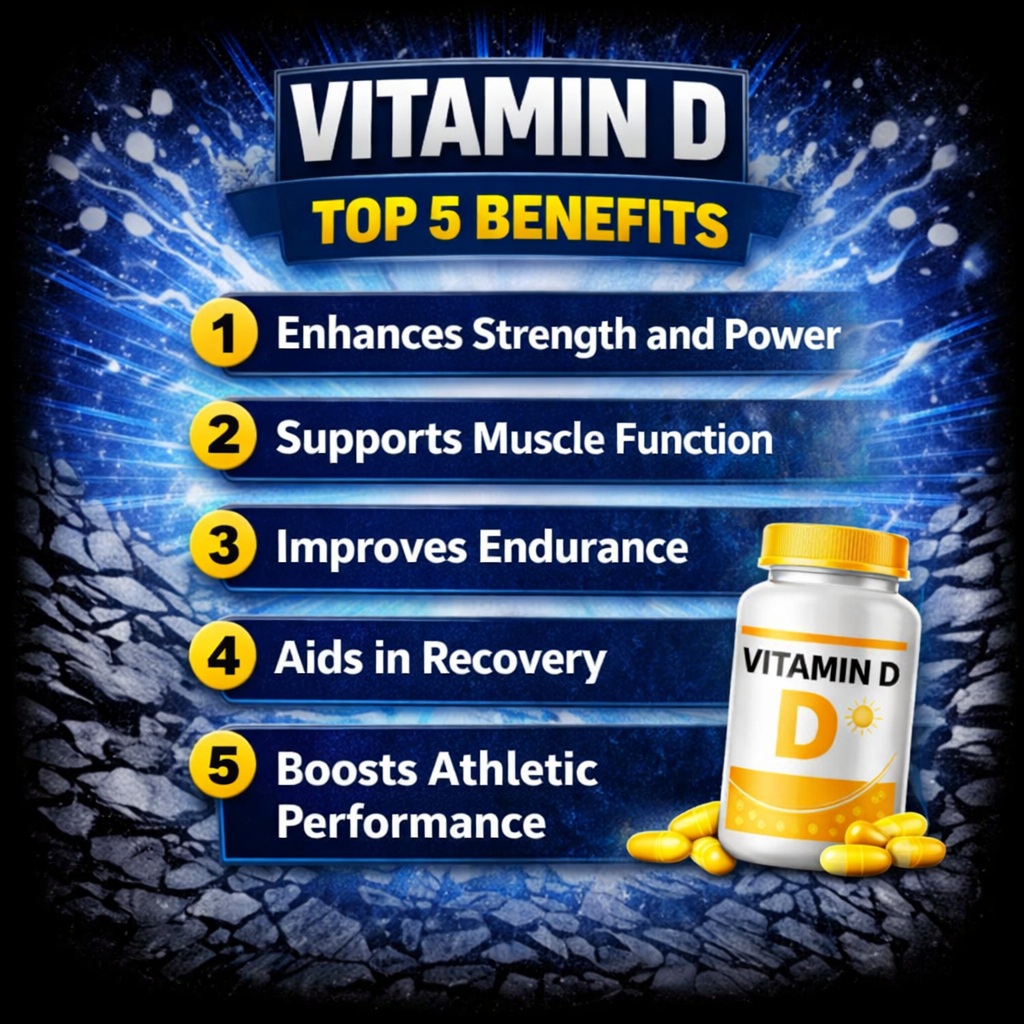

Muscle Strength and Power
- Improves muscle fiber function (particularly type II fibers) and force production
- Deficiency is associated with decreased strength and increased fatigue[18]
Neuromuscular Function and Coordination
- Enhances neuromuscular signaling and motor control
- May reduce risk of falls and non-contact injuries[19]
Bone Health and Stress Fracture Prevention
- Increases calcium absorption and bone mineral density
- Lower levels are associated with higher rates of stress fractures in athletes[20]
Recovery and Inflammation
- Modulates inflammatory cytokines following exercise
- May improve muscle recovery and reduce delayed onset muscle soreness (DOMS)[21]
Immune Function
- Supports innate and adaptive immune responses
- May reduce incidence of upper respiratory infections during heavy training[22]
Aerobic Performance (VO₂ Max)
- May improve oxygen utilization and aerobic capacity in deficient athletes
- Evidence is mixed and population-dependent[23]
Hormonal Effects (Testosterone)
- Some studies show increased testosterone levels with supplementation
- Potential impact on strength, recovery, and performance[24]
Other Health Benefits

Bone Health and Fracture Prevention
- Enhances calcium and phosphate absorption, supporting bone mineralization
- Reduces risk of osteomalacia and contributes to fracture prevention, especially in older adults[6]
Immune System Modulation
- Regulates innate and adaptive immune responses
- Associated with reduced risk of certain infections, including respiratory illnesses[26]
Cardiovascular Health
- May influence blood pressure regulation and endothelial function
- Observational studies link low Vitamin D levels with increased cardiovascular risk, though causation remains unclear[27]
Cancer Risk and Cell Regulation
- Involved in cell differentiation, apoptosis, and inhibition of tumor growth
- Evidence for cancer prevention is mixed and remains an area of ongoing research[28]
Mood and Mental Health
- May play a role in neurotransmitter regulation and brain function
- Low levels have been associated with depression, though supplementation benefits are inconsistent[29]
Metabolic Health
- May influence insulin sensitivity and glucose metabolism
- Associations exist with type 2 diabetes risk, though interventional data are variable[30]
Dosing
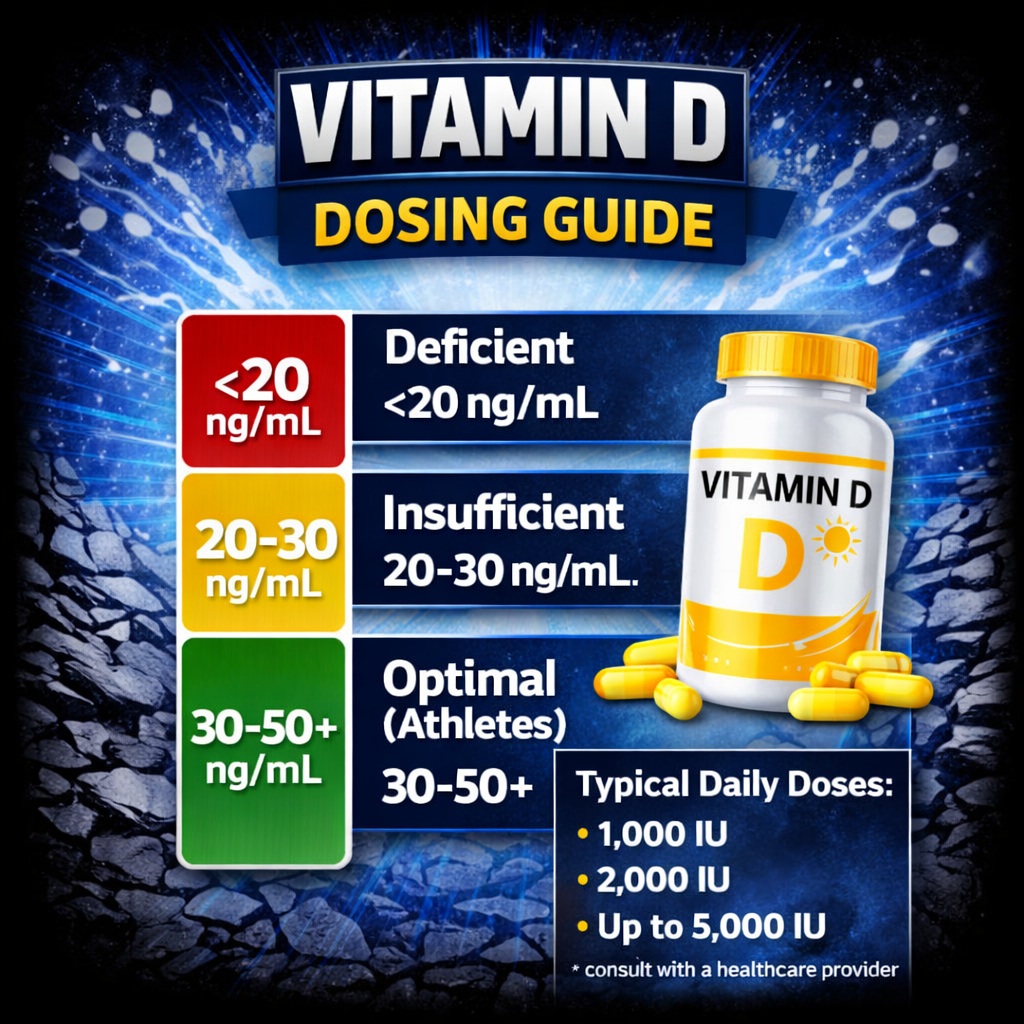

- Maintenance dosing typically 800–2000 IU daily, adjusted based on baseline levels and patient risk factors[6]
- Deficiency treatment often uses high-dose regimens (e.g., 50,000 IU weekly for 6–8 weeks) followed by maintenance therapy [6]
- Higher doses may be required in obesity, malabsorption, or chronic illness due to altered metabolism [31]
- Target serum 25(OH)D levels generally ≥20–30 ng/mL, with some recommending ≥30–40 ng/mL in high-risk populations[13]
- Athletes may require individualized dosing based on training environment, sun exposure, and deficiency status [32]
Safety Profile
- Generally well tolerated at recommended doses, with a wide therapeutic index[6]
- Safe upper intake level typically cited as 4000 IU daily for most adults [33]
- Long-term high-dose supplementation increases risk of toxicity, particularly without monitoring [34]
- Requires caution in patients with renal disease or hypercalcemia[11]
- Monitoring recommended in high-risk or high-dose patients[6]
Adverse Effects
- Hypercalcemia is the primary toxicity, leading to nausea, vomiting, and confusion [35]
- Hypercalciuria may occur, increasing risk of nephrolithiasis[6]
- Chronic excessive dosing can lead to soft tissue and vascular calcification[11]
- Symptoms of toxicity are typically seen with prolonged intake >10,000 IU/day [36]
- Rare at standard supplementation doses[6]
Pharmacokinetics
- Absorbed in the small intestine as a fat-soluble vitamin, enhanced by dietary fat[12]
- Stored in adipose tissue and liver, contributing to long half-life[6]
- Converted in liver to 25(OH)D and in kidney to active 1,25(OH)₂D (calcitriol)[12]
- Circulates bound to vitamin D–binding protein (DBP)[11]
- Half-life of 25(OH)D is approximately 2–3 weeks, allowing for intermittent dosing[6]
Interactions
- Glucocorticoids reduce Vitamin D metabolism and calcium absorption, increasing deficiency risk [37]
- Anticonvulsants (e.g., phenytoin) increase Vitamin D breakdown via hepatic enzyme induction [38]
- Orlistat and cholestyramine reduce absorption due to fat malabsorption[6]
- Thiazide diuretics may increase risk of hypercalcemia when combined with Vitamin D[11]
- Calcium supplements may enhance therapeutic effects but increase hypercalcemia risk if excessive[13]
WADA Considerations
- Vitamin D is not on the World Anti-Doping Agency prohibited list
- Widely used and permitted in competitive athletes for performance, recovery, and bone health
- No known ergogenic advantage beyond correcting deficiency, and not considered a performance-enhancing drug
- Safe for use in sport when taken within recommended dosing ranges
- Athletes should ensure supplement quality to avoid contamination with prohibited substances [39]
See Also
References
- ↑ McCollum, Elmer V., et al. “Studies on Experimental Rickets.” Journal of Biological Chemistry, vol. 53, 1922, pp. 293–312.
- ↑ Rajakumar, Kumaravel. “Vitamin D, Cod-Liver Oil, Sunlight, and Rickets: A Historical Perspective.” Pediatrics, vol. 112, no. 2, 2003, pp. e132–e135.
- ↑ Bischoff-Ferrari, H. A., et al. “Effect of Vitamin D on Falls: A Meta-Analysis.” JAMA, vol. 291, no. 16, 2004, pp. 1999–2006.
- ↑ Close, G. L., et al. “The Role of Vitamin D in Athletic Performance and Recovery.” International Journal of Sport Nutrition and Exercise Metabolism, vol. 23, no. 6, 2013, pp. 609–620.
- ↑ Spyksma, Eva E., et al. "An overview of different vitamin D compounds in the setting of adiposity." Nutrients 16.2 (2024): 231.
- ↑ 6.00 6.01 6.02 6.03 6.04 6.05 6.06 6.07 6.08 6.09 6.10 6.11 6.12 Holick, Michael F. “Vitamin D Deficiency.” New England Journal of Medicine, 2007.
- ↑ Owens, Daniel J., et al. “Vitamin D and the Athlete.” Sports Medicine, 2015.
- ↑ Lappe, Joan M., et al. “Vitamin D and Calcium Supplementation Reduces Stress Fractures.” Journal of Bone and Mineral Research, 2008.
- ↑ He, Chunyan S., et al. “Vitamin D and Respiratory Infection in Athletes.” Exercise Immunology Review, 2010.
- ↑ Close, G. L., et al. “Vitamin D in Athletic Performance.” International Journal of Sport Nutrition and Exercise Metabolism, 2013.
- ↑ 11.0 11.1 11.2 11.3 11.4 DeLuca, Hector F. “Overview of General Physiologic Features and Functions of Vitamin D.” American Journal of Clinical Nutrition, 2004.
- ↑ 12.0 12.1 12.2 12.3 Christakos, Sylvia, et al. “Vitamin D: Metabolism, Mechanism of Action, and Clinical Applications.” Physiological Reviews, 2016.
- ↑ 13.0 13.1 13.2 Rosen, Clifford J., et al. “The Nonskeletal Effects of Vitamin D: An Endocrine Society Scientific Statement.” Endocrine Reviews, 2012.
- ↑ Manson, JoAnn E., et al. “Vitamin D Supplements and Prevention of Cancer and Cardiovascular Disease.” New England Journal of Medicine, 2019.
- ↑ Autier, Philippe, et al. “Vitamin D Status and Ill Health: A Systematic Review.” Lancet Diabetes & Endocrinology, 2014.
- ↑ Owens, Daniel J., et al. “Vitamin D and the Athlete.” Sports Medicine, 2015.
- ↑ Sanders, Kerrie M., et al. “Annual High-Dose Oral Vitamin D and Falls and Fractures in Older Women.” JAMA, 2010.
- ↑ Owens, Daniel J., et al. “Vitamin D and the Athlete: Current Perspectives and New Challenges.” Sports Medicine, 2015.
- ↑ Bischoff-Ferrari, H. A., et al. “Effect of Vitamin D on Falls: A Meta-Analysis.” JAMA, 2004.
- ↑ Lappe, Joan M., et al. “Vitamin D and Calcium Supplementation Reduces Stress Fractures in Female Navy Recruits.” Journal of Bone and Mineral Research, 2008.
- ↑ Close, G. L., et al. “The Role of Vitamin D in Athletic Performance and Recovery.” International Journal of Sport Nutrition and Exercise Metabolism, 2013.
- ↑ He, Chunyan S., et al. “Influence of Vitamin D Status on Respiratory Infection Incidence in Athletes.” Exercise Immunology Review, 2010.
- ↑ Koundourakis, Nikolaos E., et al. “Vitamin D and Exercise Performance in Professional Soccer Players.” PLoS One, 2014.
- ↑ Pilz, Stefan, et al. “Effect of Vitamin D Supplementation on Testosterone Levels in Men.” Hormone and Metabolic Research, 2011.
- ↑ Charoenngam, Nipith, and Michael F. Holick. "Immunologic effects of vitamin D on human health and disease." Nutrients 12.7 (2020): 2097.
- ↑ Aranow, Cynthia. “Vitamin D and the Immune System.” Journal of Investigative Medicine, 2011.
- ↑ Wang, Thomas J., et al. “Vitamin D Deficiency and Risk of Cardiovascular Disease.” Circulation, 2008.
- ↑ Feldman, David, et al. “The Role of Vitamin D in Reducing Cancer Risk and Progression.” Nature Reviews Cancer, 2014.
- ↑ Anglin, Rebecca E. S., et al. “Vitamin D Deficiency and Depression in Adults.” British Journal of Psychiatry, 2013.
- ↑ Pittas, Anastassios G., et al. “Vitamin D and Risk of Type 2 Diabetes.” Journal of Clinical Endocrinology & Metabolism, 2007.
- ↑ Wimalawansa, Sunil J. “Vitamin D in the New Millennium.” Endocrine Reviews, 2012.
- ↑ Owens, Daniel J., et al. “Vitamin D and the Athlete.” Sports Medicine, 2015.
- ↑ Institute of Medicine. “Dietary Reference Intakes for Calcium and Vitamin D.” 2011.
- ↑ Vieth, Reinhold. “Vitamin D Toxicity, Policy, and Science.” Journal of Bone and Mineral Research, 2007.
- ↑ Vieth, Reinhold. “Vitamin D Toxicity.” Journal of Bone and Mineral Research, 2007.
- ↑ Vieth, Reinhold. “Vitamin D Toxicity.” Journal of Bone and Mineral Research, 2007.
- ↑ Compston, Juliet. “Glucocorticoid-Induced Osteoporosis.” Lancet, 2018.
- ↑ Pack, Alison M. “The Association Between Antiepileptic Drugs and Bone Disease.” Epilepsy Currents, 2003.
- ↑ Owens, Daniel J., et al. “Vitamin D and the Athlete.” Sports Medicine, 2015.
Created by:
John Kiel on 1 April 2026 22:04:56
Authors:
Last edited:
2 April 2026 01:45:24
Categories: