
Proximal Humerus Fracture
(Redirected from Proximal Humerus Fractures)
Other Names
- Humeral Head Fracture
- Humeral Neck Fracture
- Shoulder Fracture
- Shoulder Fracture-dislocation
Background
- This page refers to all proximal Humerus fractures
History
- Needs to be updated
Epidemiology
- Represent 4-5% of all fractures[1]
- Most commonly seen in geriatric patients[2]
- Increasingly common as population ages[3]
- 2:1 Female:Male (need citation)
- Third most common non-axial fracture pattern seen in patients over 65 (need citation)
Introduction

Etiology
- Lower energy
- Most commonly occurs after a low energy fall
- Likely to be minimally displaced, isolated injury
- Elderly patient
- Moderate/high energy
- E.g. MVC
- More likely to have have significant displacement
- Younger patient
Pathoanatomy
- Humerus
- Anatomic neck (fused physis)
- Surgical neck is weakest area, most common fracture location
- Vascular
- Fracture pattern can indicate which muscles were contracting at time of injury
- Pectoralis Major: Anteromedial
- Greater Tuberosity: Rotator Cuff
- Lesser Tuberosity: Subscapularis
Associated Injuries
- Glenohumeral Dislocation
- Acromioclavicular Joint Separation
- Scapular Fracture
- Clavicle Fracture
- Distal Radius Fracture
Risk Factors
- Osteopenia
- Osteoporosis
- High Fall Risk[5]
- Lack of physical activity
- Diabetes Mellitus
- Epilepsy
Differential Diagnosis
Differential Diagnosis Shoulder Pain
- Fractures
- Proximal Humerus Fracture
- Humeral Shaft Fracture
- Clavicle Fracture
- Scapula Fracture
- First Rib Fracture (traumatic or atraumatic)
- Floating Shoulder
- Dislocations & Separations
- Arthropathies
- Muscle & Tendon Injuries
- Rotator Cuff
- Bursopathies
- Ligament Injuries
- Neuropathies
- Other
- Pediatrics
- Coracoid Avulsion Fracture
- Humeral Head Epiphysiolysis (Little League Shoulder)
Clinical Features
History
- Pain, swelling, bruising
- Loss of range of motion
Physical: Physical Exam Shoulder
- Ecchymosis may extend across shoulder, arm and into chest
- Neurovascular exam, especially axillary nerve
- Evaluate for other shoulder and Thoracic injuries
Evaluation


Radiographs
- Standard Radiographs Shoulder
- Usually sufficient for diagnosis
- Generally demonstrate cortical breaks with varying degree of angulation, displacement, comminution, impaction
CT
- Indications
- Pre-operative planning
- Uncertainty of humeral head or greater tuberosity position
- Intra-articular extension
- Concern for "head split" fracture
MRI
- Rarely indicated for
- Evaluate for associated rotator cuff injury
Classification
Neer Classification
- Based on anatomic relationship of 4 segments
- Greater tuberosity
- Lesser tuberosity
- Articular surface
- Shaft
- Criteria for displacement
- >1 cm displacement
- >45° angulation
AO classification
- Type A: extra-articular unifocal (either tuberosity +/- surgical neck of the humerus)[7]
- A1: extra-articular unifocal fracture
- A2: extra-articular unifocal fracture with impacted metaphyseal fracture
- A3: extra-articular unifocal fracture with non-impacted metaphyseal fracture
- Type B: extra-articular bifocal (both tuberosities +/- surgical neck of the humerus or glenohumeral dislocation)
- B1: extra-articular bifocal fractures with impacted metaphyseal fracture
- B2: extra-articular bifocal fractures with non-impacted metaphyseal fracture
- B3: extra-articular bifocal fractures with glenohumeral joint dislocation
- Type C: extra-articular (anatomical neck) but with compromise to the vascular supply of the articular segment
- C1: anatomical neck fracture, minimally displaced
- C2: anatomical neck fracture, displaced and impacted
- C3: anatomical neck fracture with glenohumeral joint dislocation
Management
General
- No clear, evidence-based consensus for management of many of these fractures
- Most uncomplicated cases are treated nonoperatively
- Expectation that fracture will heal and patient will regain some or full function of shoulder
Nonoperative
- Indications
- Most cases with minimal displacement of surgical or anatomic neck
- Displacement < 5 mm
- Poor surgical candidates
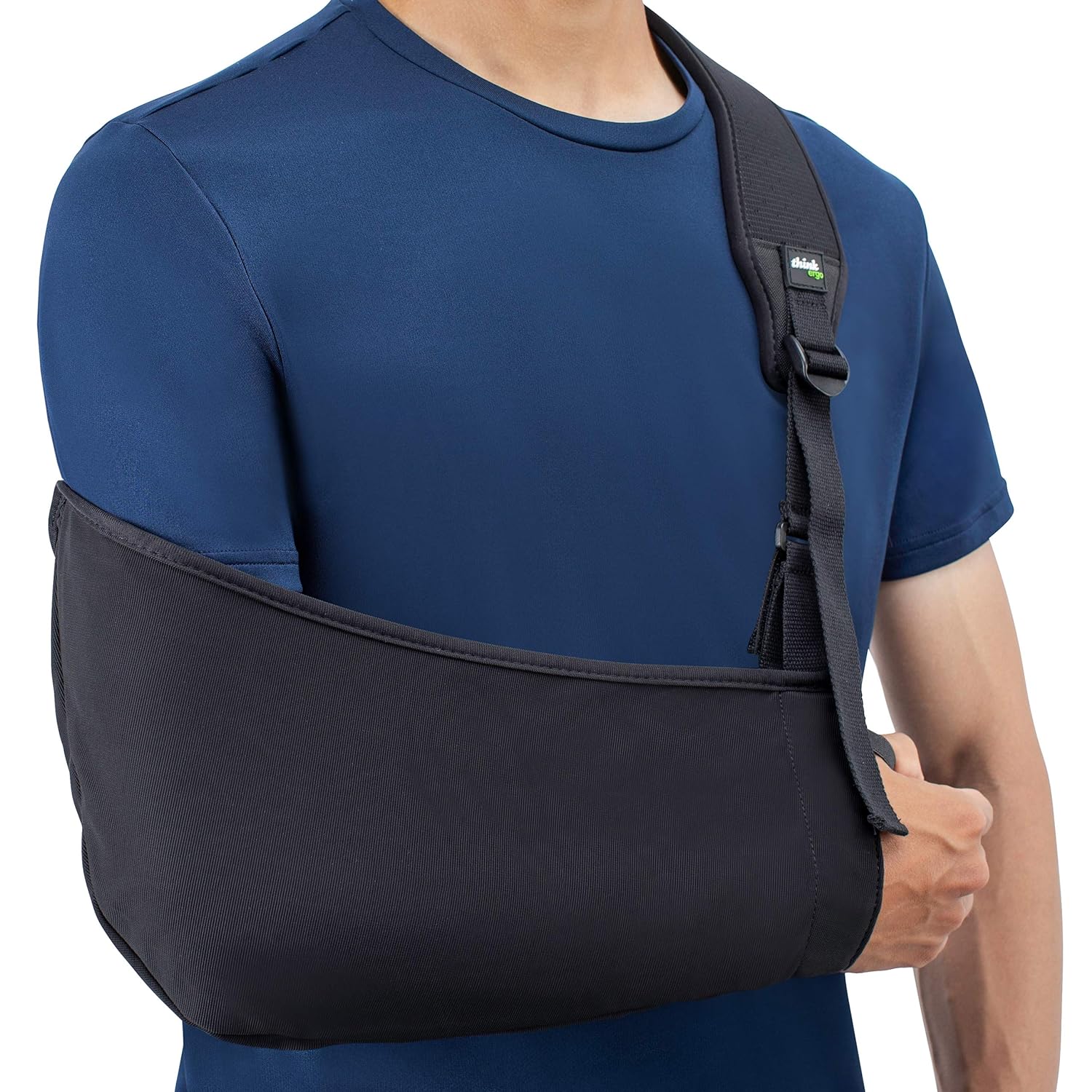
- Immobilize: Shoulder Immobilizer, Shoulder Sling
- Start early range of motion at ~2 weeks
Operative
- Indications
- 2-part surgical neck fractures
- 3-part and valgus-impacted 4-part fractures
- Greater tuberosity fracture displaced > 5 mm
- Displaced 2-part fractures
- 3- and 4-part fractures in younger patients
- Head splitting fractures
- Technique
- closed reduction with percutaneous pinning
- ORIF
- IM Nail
- Arthroplasty
Rehab and Return to Play
Rehabilitation
- 3 phase protocol[8]
- Early passive range of motion
- Progress to active range of motion, resistance exercises
- Advance stretching and strengthening program
Return to Play/Work
- Needs to be updated
Prognosis and Complications
Prognosis
- Needs to be updated
Complications
- Axillary Nerve Injury
- Avascular Necrosis
- Suprascapular Nerve Injury
- Malunion
- Nonunion
- Rotator Cuff Tear
- Proximal Biceps Tendon Tear
- Adhesive Capsulitis
- Glenohumeral Arthritis
- Infection
See Also
Internal
- Physical Exam Shoulder
- Shoulder Anatomy (Main)
- Neck Pain (Main)
- Shoulder Pain (Main)
- Elbow Pain (Main)
External
- Sports Medicine Review Shoulder Pain: https://www.sportsmedreview.com/by-joint/shoulder/
- https://www.sportsmedreview.com/blog/case-report-bilateral-proximal-humerus-fractures/
References
- ↑ Konrad GG, Mehlhorn A, Kuhle J, et al. Proximal humerus fractures—current treatment options. Acta Chir Orthop Traumatol Cech. 2008;75:413–421.
- ↑ Horak J, Nilsson BE. Epidemiology of fracture of the upper end of the humerus. Clin Orthop Relat Res. 1975;(112):250–3.
- ↑ Bengner U, Johnell O, Redlund-Johnell I. Changes in the incidence of fracture of the upper end of the humerus during a 30-year period. A study of 2125 fractures. Clin Orthop Relat Res. 1988;231:179–182.
- ↑ Image courtesy of www.jaortho.com.au, "proximal humerus fractures"
- ↑ Chu, Sarah P., et al. "Risk factors for proximal humerus fracture." American journal of epidemiology 160.4 (2004): 360-367.
- ↑ Martinez, Angel Antonio, et al. “The use of the Lima reverse shoulder arthroplasty for the treatment of fracture sequelae of the proximal humerus.” Journal of Orthopaedic Science 17.2 (2012): 141-147.
- ↑ https://radiopaedia.org/articles/ao-classification-of-proximal-humeral-fractures-1?lang=us
- ↑ Hodgson, Steve. "Proximal humerus fracture rehabilitation." Clinical Orthopaedics and Related Research® 442 (2006): 131-138.