
Infrapatellar Bursitis
Other Names
- Superficial infrapatellar bursitis
- Clergyman's knee
- Vicar's knee
- Deep Infrapatellar Bursitis
Background
- This page refers to bursitis of the either the superficial or deep infrapatellar bursa of the knee
History
- First mentioned by Klein in 1996[1]
Epidemiology
- Not well described in the literature, mostly limited to case reports
- Knee bursitis in the workforce was estimated to have a prevalence of 1.4% to 2.3%[2]
Description


- See: Bursopathies (Main)
General
- Overall, poorly characterized in the literature
- Generally considered an inflammatory condition with fluid accumulation as a result of chronic stress
Etiology
Associated Conditions
Anatomy of the Superficial Infrapatellar Bursa
- Lies between the subcutaneous tissues and the superficial aspect of the Patellar Tendon
- Can exist as a single sac, or less commonly, multisegmented series of loculated sacs
Anatomy of the Deep Infrapatellar Bursa
- Lies above the tibial tubercle, immediately superior to the distal patellar tendon and posterior to the lower 3rd of the tendon
- Reduces friction of the patellar tendon over the tibia
Risk Factors
- Occupations/ Activities
- Kneeling
- Crawling
Differential Diagnosis
Differential Diagnosis Knee Pain
- Fractures
- Dislocations & Subluxations
- Patellar Dislocation (and subluxation)
- Knee Dislocation
- Proximal Tibiofibular Joint Dislocation
- Muscle and Tendon Injuries
- Ligament Pathology
- Arthropathies
- Bursopathies
- Patellofemoral Pain Syndrome (PFPS)/ Anterior Knee Pain)
- Neuropathies
- Other
- Bakers Cyst (Popliteal Cyst)
- Patellar Contusion
- Pellegrini Stieda Syndrome
- Parameniscal Cyst
- Pediatric Considerations
- Patellar Apophysitis (Sinding-Larsen-Johnansson Disease)
- Patellar Pole Avulsion Fracture
- Tibial Tubercle Avulsion Fracture
- Tibial Tuberosity Apophysitis (Osgood Schalatters Disease)
- Proximal Tibial Metaphyseal Fracture
- Proximal Tibial Physeal Injury
Clinical Features

History
- Patient will endorse anterior knee pain
- Often with a history of repetitive microtrauma from kneeling
Physical Exam: Physical Exam Knee
- Palpable swelling inferior to the patella (if superficial)
Evaluation


Radiology
- Standard Radiographs Knee
- Often normal
- Findings
- May show calcification of bursa in chronic cases
Ultrasound
- Can be used to help diagnose injury
- Findings
- Discrete, well defined fluid collection anterior the patella tendon
MRI
- Findings
- Fluid collection that projects exophytically, anterior to the patellar tendon
- Localized with well defined fluid collection
Classification
- Not applicable
Management
Nonoperative
- Indicated in most cases
- Relative rest
- NSAIDS
- Physical Therapy
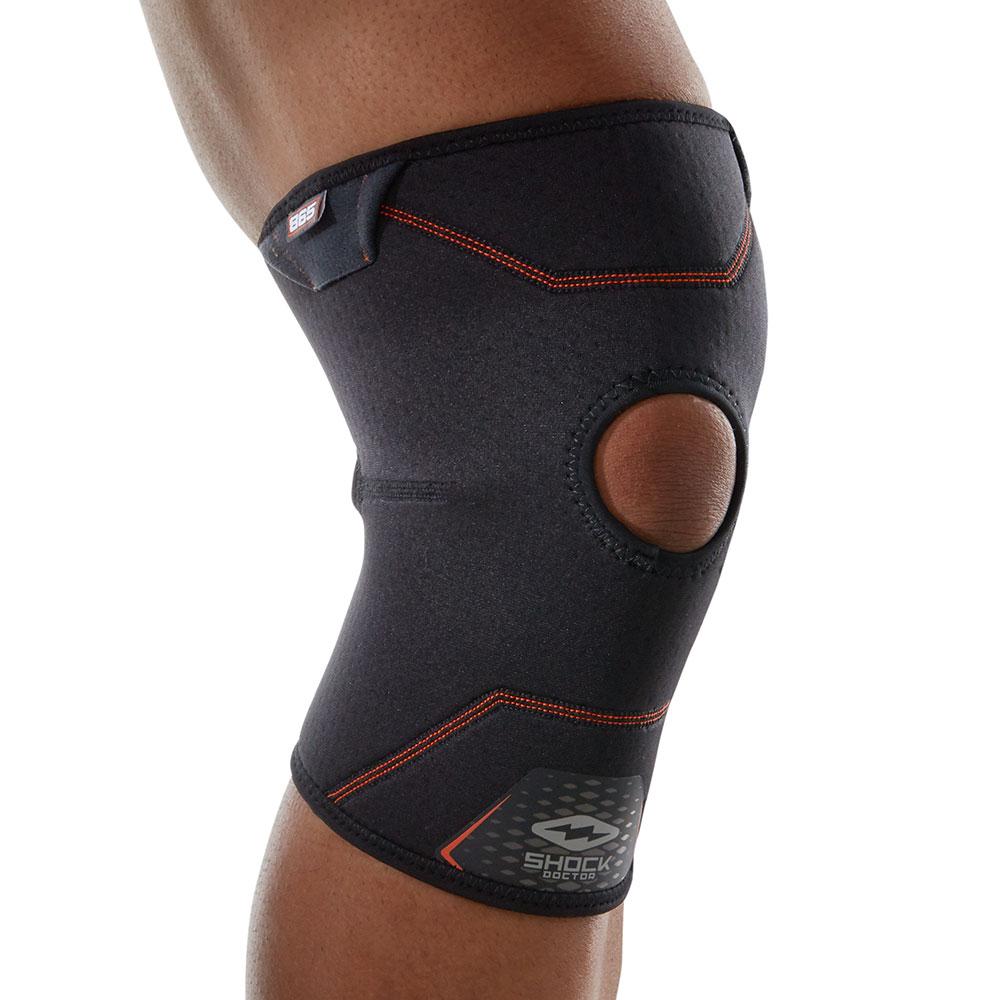
- Knee Compression Sleeve or Ace Wrap
- Infrapatellar Bursa Injection
- Persistently swollen or painful bursa may require aspiration
- If considered non-infectious, consider Corticosteroid Injection
Operative
- Generally not indicated (case reports?)
Rehab and Return to Play
Rehabilitation
- Needs to be updated
Return to Play
- Needs to be updated
Complications And Prognosis
Prognosis
- Most patients can expect to make a full recovery
Complications
- Chronic pain
- Inability to return to work/ sport
See Also
Internal
External
- Sports Medicine Review Knee Pain: https://www.sportsmedreview.com/by-joint/knee/
References
- ↑ Klein, Wilhelm. "Endoscopy of the deep infrapatellar bursa." Arthroscopy: The Journal of Arthroscopic & Related Surgery 12.1 (1996): 127-131.
- ↑ Le Manac’h, A. P., et al. "Prevalence of knee bursitis in the workforce." Occupational medicine 62.8 (2012): 658-660.
- ↑ Malanga, Gerard A., and Kenneth R. Mautner. "Atlas of ultrasound-guided musculoskeletal injections." (No Title) (2014).
- ↑ Hirji, Zameer, Jaspal S. Hunjun, and Hema N. Choudur. "Imaging of the bursae." Journal of Clinical Imaging Science 1 (2011).
- ↑ Van den Bossche, Dorien, et al. "Case report: infrapatellar bursitis caused by Prototheca wickerhamii." Medical mycology case reports 1.1 (2012): 13-16.
Created by:
John Kiel on 10 June 2019 17:08:43
Authors:
Last edited:
3 February 2025 15:23:57
Categories: